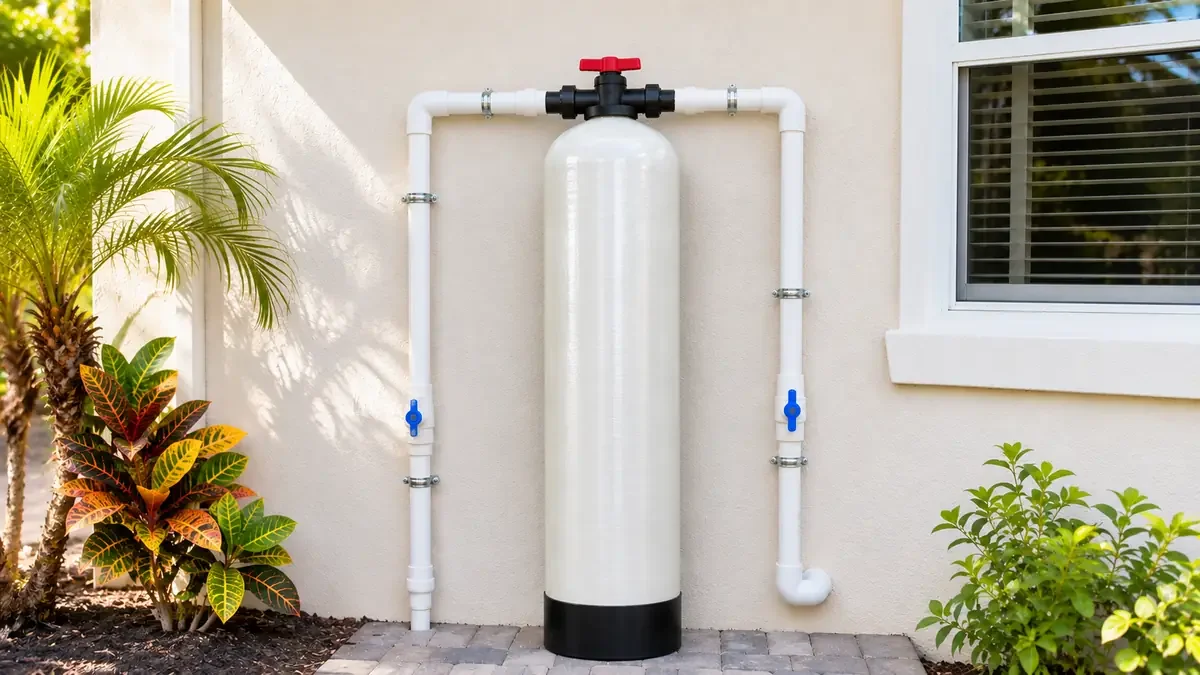
Salt-free water softeners do reduce scale, but they don't soften water. They leave the calcium and magnesium in, so you don't get the slick feel, easier lathering or spot-free glass of softened water. They can make sense on moderately hard city water. On very hard water, or a well with iron or sulfur, a salt-based softener is the better choice.
Here is what these systems actually do, where they fit, and how to tell which one your home needs.
What Is a Salt-Free Water Softener?
It's a water conditioner, sold under names like salt-free softener, saltless softener, no-salt softener or descaler. The most common type uses template-assisted crystallization, or TAC. Water flows through a tank of special media beads, which turn dissolved calcium into microscopic crystals. Those crystals stay suspended in the water and are less likely to stick to pipes, heater elements and fixtures.
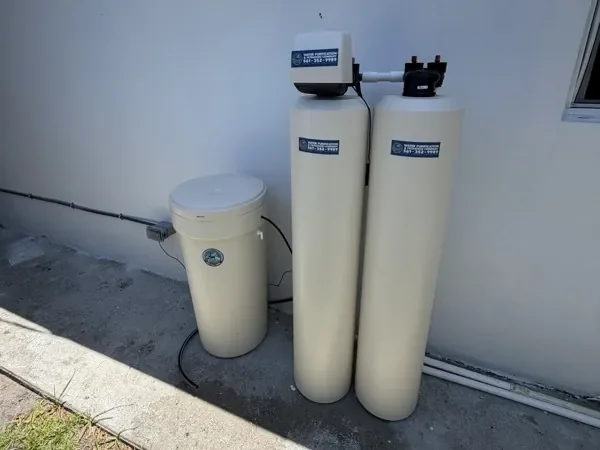
A traditional softener works differently. It uses ion exchange to swap the calcium and magnesium for sodium (or potassium), then rinses the captured minerals down the drain with salty brine every few days. The water that comes out is actually soft. A conditioner's water still tests hard.
Do Salt-Free Water Softeners Really Work?
For scale, the evidence is reasonable. An independent study led by Arizona State University for the WateReuse Research Foundation, with funding from the Bureau of Reclamation and several water utilities, tested softener alternatives on two kinds of hard water. TAC cut scale formation sharply, and did better than the magnetic and electronic devices tested alongside it.
The industry is more cautious. The Water Quality Association has called the effectiveness of these devices "hotly debated", and there's no US performance standard for scale prevention the way there is for softeners. So it's fair to say TAC reduces scale under the right conditions. It's not fair to say it softens water, or that every product labeled "salt-free" performs the same.
What a Salt-Free System Won't Do
Remove hardness. A hardness test reads the same before and after.
Give you the soft-water feel. Soap lathers the same, and skin and hair feel the same.
Stop spots. When water evaporates on glass or a shower door, the minerals are still there to leave a mark.
Treat chloramine, lead or PFAS. That takes carbon filtration or reverse osmosis.
Cope with iron, sulfur or copper. Makers' manuals typically limit iron to 0.3 ppm and manganese to 0.05 ppm, and say hydrogen sulfide and oil must be removed first. Above those levels the media fouls.
Salt-Free vs Salt-Based Water Softener
| Feature | Salt-based softener | Salt-free conditioner |
|---|---|---|
| Removes hardness | Yes | No |
| Reduces scale | Yes | Yes, partly |
| Soft-water feel and easier lathering | Yes | No |
| Fewer spots on glass | Yes | Not much |
| Salt bags | Yes, refilled regularly | None |
| Drain and electricity | Needs both | Needs neither |
| Adds sodium | A small amount | No |
| Upkeep | Salt, yearly service | Media replacement every few years |
| Iron or sulfur in the water | Handles small amounts of iron | Needs it removed first |
For a fuller look at how softening works, see hard water vs soft water.
When a Salt-Free System Makes Sense
A conditioner is a fair choice when scale is your main complaint and your water is only moderately hard. That's more common in South Florida than people expect. Many city utilities soften or membrane-treat their water before it reaches you. Boca Raton, for example, reports finished-water hardness of about 65 to 80 mg/L, roughly 4 to 5 grains per gallon, which the Water Quality Association scale rates as moderately hard.
It also fits a few situations where a softener is hard to install:
A condo or HOA that doesn't allow softener discharge, or a unit with no drain nearby
A household that doesn't want to carry salt bags
Someone on a sodium-restricted diet who wants scale protection without added sodium (though a reverse osmosis faucet for drinking water also solves that)
On South Florida city water, a conditioner is usually paired with a whole house carbon filter placed in front of it. The carbon removes chloramine, and the conditioner handles scale.
When a Salt-Based Softener Is the Better Choice
Your water is hard or very hard, above about 7 grains per gallon. The higher the hardness, the more you'll notice what a conditioner leaves behind.
You want the soft-water results: no spots, easier cleaning, less soap and detergent.
You're on a private well. Florida wells often carry iron and hydrogen sulfide, which foul conditioner media. A well usually needs iron and sulfur treatment, and often a softener after it.
For most South Florida homes with hard water and a place for the tank, we recommend a salt-based water softener.
How Much Does a Salt-Free Water Softener Cost?
Installed, a whole-house salt-free conditioner typically runs $1,500 to $3,500 in South Florida, depending on the size and whether a carbon filter goes with it. There's no salt to buy, but the media needs replacing every few years. One major maker lists every three years for its residential models. A salt-based softener installed with Water Wizards runs $1,495 to $2,500, plus salt. See our water softener cost breakdown for the running costs side by side.
How to Decide: Test First
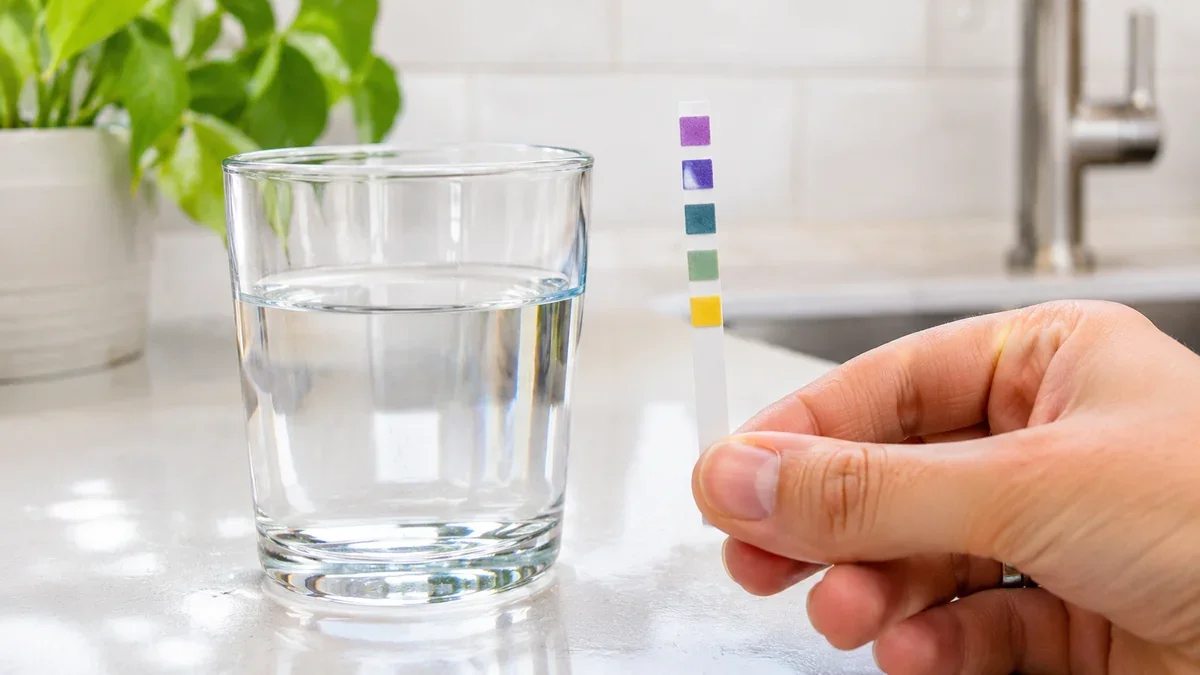
The right answer depends on two numbers most people don't know: your hardness in grains per gallon, and whether there's iron in your water. Your utility's water quality report may list hardness, and a test at your tap gives both. Our free in-home water test measures hardness, chloramine, iron, pH and total dissolved solids at your kitchen sink. We'll tell you plainly whether a softener, a conditioner or nothing at all makes sense.
Not sure which your water needs? Free water test at your sink and one written price. Call 561-352-9989 or book online.
Salt-Free Water Softener FAQs
Are salt-free water softeners worth it?
They're worth it if your water is moderately hard and scale is the only problem you want to fix. If you want soft water or have very hard water, a salt-based softener gives you more for a similar price.
Do salt-free water softeners remove hardness?
No. They change how calcium crystallizes so it's less likely to stick as scale, but the minerals stay in the water and a hardness test reads the same.
Will I still get water spots with a salt-free system?
Usually, yes. Spots form when water dries and leaves its minerals behind, and a conditioner doesn't remove those minerals.
Do salt-free water softeners work on well water?
Rarely on their own. Iron, manganese and hydrogen sulfide, all common in Florida wells, foul the media, so they have to be removed first.
How long does salt-free media last?
Typically a few years. Manufacturers' schedules vary, and one major maker lists three years for its residential units.
Do magnetic or electronic water conditioners work?
The evidence is weaker than for TAC. In the WateReuse study, electromagnetic and electrically induced units reduced scale less than the TAC media did.
Is a salt-free softener better for the environment?
It uses no salt and sends no brine down the drain, which helps most in homes on septic or where discharge is restricted. A well-tuned salt softener that only regenerates when needed also keeps salt use down.
Can I add a salt-free conditioner to my existing filter?
Often, yes. It goes after the carbon filter on the main line. We check the space, your water and the existing system first.