Hard Water vs. Soft Water: What's the Difference and Do You Need a Softener?
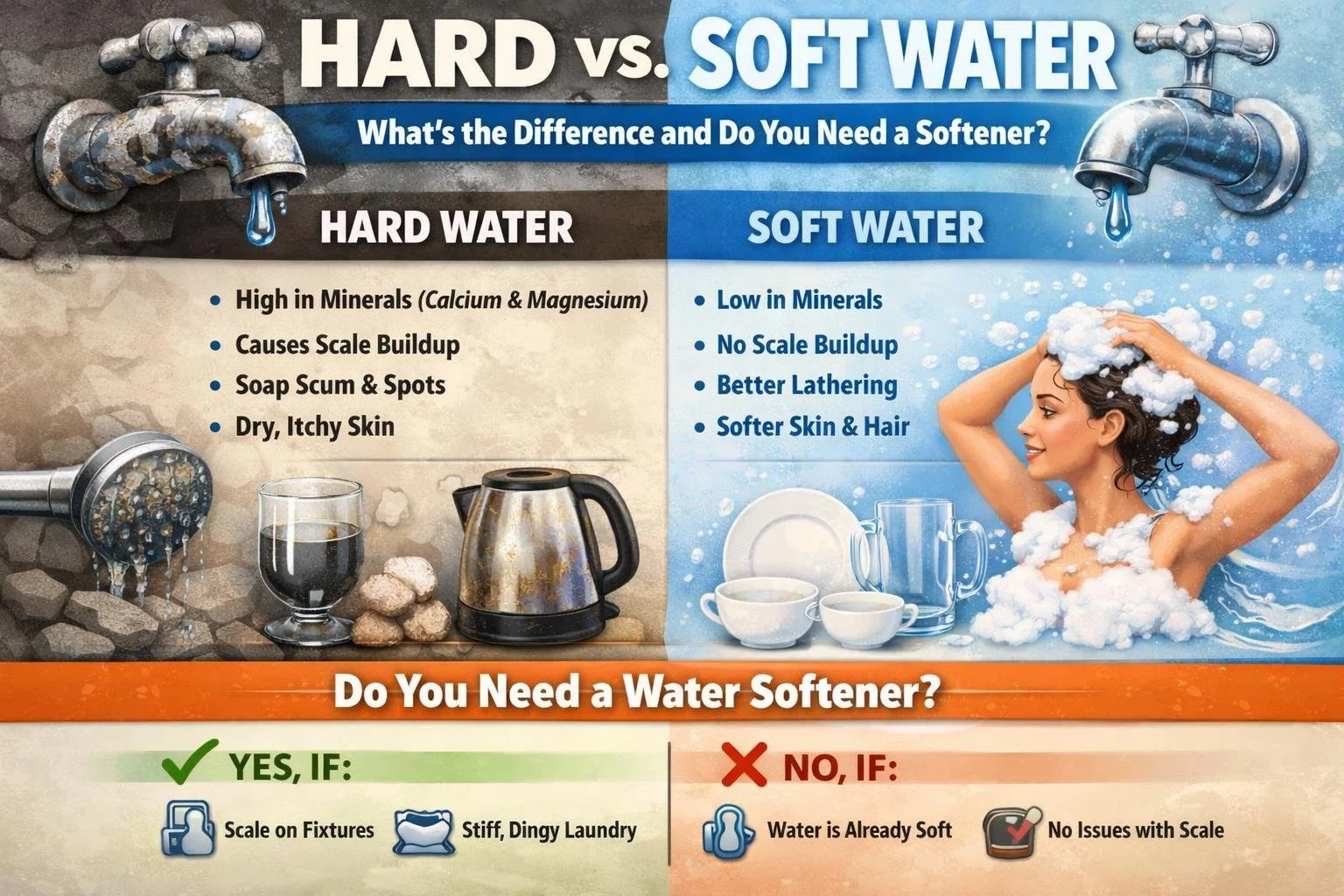
Everything you need to know to decide if a water softener is right for your Florida home
If you've lived in Florida for any length of time, you've probably noticed that water here is... different. Maybe your dishes come out of the dishwasher spotted and cloudy. Maybe your skin feels dry and tight after showers. Maybe you've seen that white, chalky buildup on your faucets and showerheads.
That's hard water. And Florida has some of the hardest water in the country.
But is hard water actually a problem? Do you really need to do something about it? And if so, what's the best solution?
I get these questions constantly from Florida homeowners. The truth is, understanding the difference between hard water and soft water — and knowing when a water softener makes sense — can save you thousands of dollars in appliance repairs, plumbing problems, and everyday frustrations.
Let me break it all down for you.
What Makes Water "Hard" or "Soft"?
The terms "hard" and "soft" refer to the mineral content of water — specifically, the concentration of calcium and magnesium.
Hard water contains high levels of these dissolved minerals. As rainwater falls through the atmosphere and seeps through soil and rock, it picks up calcium and magnesium along the way. The more limestone, chalk, and mineral-rich geology the water passes through, the harder it becomes.
Soft water has low levels of calcium and magnesium. Rainwater starts naturally soft. Water that comes from sources with less mineral contact — or water that has been treated to remove minerals — is considered soft.
Here's the key thing to understand: this isn't about contamination or safety. Hard water minerals are not harmful to drink. In fact, calcium and magnesium are essential nutrients. The "problem" with hard water is entirely about what it does to your home, your appliances, your skin and hair, and your wallet.
How Hard Is Hard? The Hardness Scale
Water hardness is measured in grains per gallon (gpg) or parts per million (ppm). Here’s how the scale breaks down:
Soft (0–3.5 gpg / 0–60 ppm), Moderately Hard (3.5–7 gpg / 61–120 ppm), Hard (7–10.5 gpg / 121–180 ppm), Very Hard (10.5–15 gpg / 181–250 ppm), Extremely Hard (15+ gpg / 250+ ppm)
Where does Florida fall? Most of the state is in the "hard" to "extremely hard" range:
Tampa area: 15-17 gpg (extremely hard)
Miami/South Florida: 12-18 gpg (very hard to extremely hard)
Southwest Florida: 15-25+ gpg (extremely hard)
Orlando area: 8-12 gpg (hard to very hard)
Jacksonville: 8-15 gpg (hard to very hard)
For context, the national average is about 10-13 gpg. Much of Florida exceeds this significantly.
Signs You Have Hard Water
You don't need a test to know you have hard water — the signs are usually obvious once you know what to look for:
In Your Kitchen and Bathroom
White, chalky deposits on faucets and fixtures. This scale buildup is calcium carbonate left behind as water evaporates. It's stubborn to clean and keeps coming back.
Spots and film on dishes and glassware. Even after running through the dishwasher, glasses come out cloudy or spotted. This is mineral residue.
Soap scum on shower doors, tubs, and sinks. Hard water reacts with soap to form a sticky residue that clings to surfaces.
Ring around the bathtub. That grey ring isn't dirt — it's mineral deposits combined with soap scum.
On Your Body
Dry, itchy skin after bathing. Hard water minerals and the soap scum they create don't rinse away completely. They leave a film on your skin that can cause dryness, irritation, and worsen conditions like eczema.
Dull, flat, difficult-to-manage hair. The same film that affects your skin coats your hair, making it feel rough, look dull, and harder to style. Shampoo doesn't lather well, so you use more of it.
Soap doesn't lather properly. Whether it's hand soap, body wash, or shampoo, you need significantly more product to get a decent lather with hard water.
In Your Laundry
Stiff, scratchy towels and clothes. Hard water minerals get trapped in fabric fibers, making them feel rough and reducing softness.
Faded, dingy-looking clothes. Colors fade faster, whites turn grey, and clothes generally look worn out sooner than they should.
Need more detergent to get things clean. Just like with body soap, laundry detergent is less effective in hard water, so you use more.
In Your Home
Reduced water pressure. Scale builds up inside pipes over time, narrowing the opening and restricting flow.
The water heater is making rumbling or popping sounds. This indicates sediment buildup at the bottom of the tank — a common hard water problem.
Appliances breaking down prematurely. Dishwashers, washing machines, and water heaters all suffer from hard water damage.
If you're experiencing several of these symptoms, you almost certainly have hard water. In Florida, the question isn't really "do I have hard water?" — it's "how hard is my water, and what should I do about it?"
The Real Cost of Hard Water
Hard water isn't just annoying — it's expensive. Here's what it's actually costing you:
Appliance Damage and Shortened Lifespan
According to research by the Water Quality Association, hard water can reduce appliance efficiency by up to 48% and shorten appliance lifespan by 30-50%.
Water heaters take the biggest hit. Scale insulates the heating element, making it work harder and use more energy. A water heater that should last 12-15 years may fail in 8-10 years with hard water. Studies show that just a few millimeters of scale can increase energy consumption by 15-30%.
Dishwashers and washing machines experience clogged spray arms, damaged seals, and reduced cleaning effectiveness. They work harder, use more energy, and break down sooner.
The cost impact: One study estimated that hard-water-related appliance damage and inefficiencies cost homeowners $1,500+ over 10 years — and that's just for the water heater.
Higher Energy Bills
When scale builds up in your water heater, it acts as an insulator between the heating element and the water. The heater has to work harder and longer to heat the same amount of water.
Research shows this can increase water heating costs by 24-48% for gas water heaters. Over the years of ownership, this adds hundreds of dollars to your utility bills.
More Cleaning Products and Personal Care Items
With hard water, you use significantly more:
Dish soap and dishwasher detergent
Laundry detergent and fabric softener
Shampoo and body wash
Household cleaning products
Estimates suggest households with hard water spend 50-75% more on soap and cleaning products than those with soft water. That can easily add up to $200-400 per year.
Plumbing Problems
Scale buildup doesn't just affect appliances — it accumulates inside your pipes. Over time, this can:
Reduce water pressure throughout your home
Create clogs that require professional clearing
In severe cases, pipe replacement is required
Replumbing a home can cost $5,000-15,000 depending on the extent of the damage.
The Bottom Line
Conservative estimates suggest hard water costs the average household $500-1,000+ per year in increased expenses, reduced efficiency, and accelerated wear. Over the 15-20 year lifespan of a water softener, that's $7,500-20,000 in costs that could be avoided.
What About the Benefits of Hard Water?
To be fair, hard water isn't all bad. Some people prefer the taste of mineral-rich water over softened water. And the calcium and magnesium in hard water are beneficial nutrients.
However, drinking water is only a small fraction of household water use. The vast majority goes to bathing, laundry, dishes, and other uses where hard water creates problems.
For drinking water specifically, many people install a reverse osmosis system at their kitchen sink. This provides mineral-free drinking water while the rest of the house benefits from softened water — the best of both worlds.
How Water Softeners Work
A water softener is a whole-house treatment system that removes calcium and magnesium from your water through a process called ion exchange.
Here's the basic process:
Hard water enters the softener tank, which contains thousands of tiny resin beads charged with sodium (or potassium) ions.
As water passes through the resin, calcium and magnesium ions are attracted to the beads and stick to them. In exchange, sodium ions are released into the water.
Softened water exits the tank and flows throughout your home — to every faucet, shower, and appliance.
Periodically, the softener regenerates by flushing the resin with a concentrated salt solution (brine). This knocks the calcium and magnesium off the beads and sends them down the drain, while recharging the resin with fresh sodium ions.
The result: water with virtually zero hardness that won't cause scale, soap scum, or the other problems associated with hard water.
Do You Actually Need a Water Softener?
Here's my honest assessment:
If your water hardness is below 3-4 gpg: You probably don't need a softener. Minor hardness won't cause significant problems.
If your water hardness is 4-7 gpg: Softening is optional. You'll notice some hard water effects, but they may be manageable. Consider your tolerance for the inconveniences and whether you're seeing appliance issues.
If your water hardness is above 7 gpg: Softening is strongly recommended. At this level, hard water is causing real damage to your home and costing you real money.
If your water hardness is above 10-15 gpg (most of Florida): Softening is essentially necessary if you want to protect your plumbing, appliances, and quality of life.
The Minnesota Department of Health suggests that homeowners with water hardness above 7 gpg (120 ppm) "might need a water softener to ensure your appliances run well and to improve the taste, smell, or look of your water."
Given that most of Florida is well above this threshold, water softening makes sense for the vast majority of Florida homeowners.
What About Salt-Free "Softeners"?
You may have seen products marketed as "salt-free water softeners" or "water conditioners." It's important to understand what these actually do — and don't do.
Salt-free systems are not softeners. They don't remove calcium and magnesium from water. They use various technologies (typically template-assisted crystallization or magnetic/electronic treatment) to change the structure of minerals so they're less likely to form scale.
What they can do:
Reduce scale buildup in pipes and appliances
Requires no salt or regeneration
Produce no wastewater
What they can't do:
Eliminate soap scum
Make the soap lather better
Prevent mineral deposits on fixtures, dishes, and surfaces
Give you the "soft water feel"
Protect your water heater as effectively as true softening
For Florida's extremely hard water, salt-free conditioners typically aren't sufficient. They may help somewhat with scale, but they won't solve the full range of hard water problems. If you want truly soft water with all its benefits, you need an ion-exchange water softener.
Concerns About Water Softeners
Some homeowners have concerns about water softeners. Let me address the most common ones:
"Will softened water taste salty?"
No. The amount of sodium added during softening is quite small — typically 20-30 mg per 8-ounce glass for moderately hard water. For comparison, a slice of bread contains 100-200 mg of sodium. Most people can't taste the difference.
If sodium is a concern (for medical reasons), you can use potassium chloride instead of sodium chloride in your softener. The process works the same way, but potassium is added instead of sodium.
"Is softened water safe to drink?"
Yes, for most people. The sodium levels are well below anything that would cause health concerns for healthy adults.
However, if you're on a severely sodium-restricted diet, you may want to:
Use potassium chloride instead of sodium chloride
Install a reverse osmosis system for drinking water (which removes the sodium)
Have an unsoftened tap at the kitchen sink for drinking and cooking
"What about the environmental impact?"
Water softeners do produce a brine waste stream during regeneration that contains salt and the removed minerals. This is a legitimate consideration.
Modern high-efficiency softeners use significantly less salt and water than older models. Metered (demand-initiated) softeners only regenerate when needed, rather than on a fixed schedule, further reducing waste.
Some areas have restrictions on water softener discharge. In Florida, this isn't currently a widespread issue, but it's worth checking local regulations.
"Will soft water feel 'slimy'?"
Some people initially describe soft water as feeling "slippery" or "slick." This is actually the absence of mineral residue — your soap is rinsing away completely rather than leaving film on your skin.
Most people adjust quickly and come to prefer the clean feeling of soft water. Your skin and hair will actually feel better once you're not coating them with soap scum every time you shower.
How to Test Your Water Hardness
Before investing in a water softener, you should know your actual hardness level. Here are your options:
DIY Test Strips
Available at hardware stores for $5-15. Dip the strip in water, wait the specified time, and compare the color to the chart. These give a reasonable estimate but aren't highly precise.
The Soap Bottle Test
A quick-and-dirty method: fill a clear bottle one-third with water, add a few drops of pure liquid soap, and shake vigorously. If it lathers easily with lots of bubbles and clear water underneath, your water is relatively soft. If it's cloudy with few bubbles, you have hard water. This tells you whether you have hard water but not how hard.
Your Water Utility Report
If you're on city water, your utility publishes an annual Consumer Confidence Report that often includes hardness data. You can also call them directly for this information.
Professional Testing
This is the most accurate option. A water treatment professional will test your water and give you exact hardness numbers, plus identify any other issues (iron, pH, etc.) that might affect treatment recommendations.
At Water Wizards, we offer free in-home water testing. We'll measure your hardness, check for iron and other issues, and show you exactly what's in your water — no guessing, no obligation.
Choosing the Right Water Softener
If you decide a softener makes sense, here's what to consider:
Size/Capacity
Water softeners are rated by grain capacity — typically 24,000 to 80,000 grains for residential systems. The right size depends on:
Your water hardness level
Your household size and water usage
How often do you want the system to regenerate
An undersized softener will regenerate too frequently, wasting salt and water. An oversized softener costs more upfront than necessary.
Metered vs. Timer-Based
Metered (demand-initiated) softeners track your water usage and regenerate only when needed. They're more efficient with salt and water.
Timer-based softeners regenerate on a fixed schedule regardless of actual usage. They're simpler but typically waste more salt.
For Florida's hard water, I strongly recommend metered systems.
Salt Efficiency
Modern high-efficiency softeners use less salt per regeneration than older designs. Over the years of operation, this saves significant money on salt costs.
Build Quality and Warranty
Like any major home equipment, quality varies. Look for:
Reputable brands
Strong warranties (10+ years on tanks, 5+ years on valves)
Professional installation
Features
Modern softeners may include:
Digital controls and displays
Water usage monitoring
Low-salt alerts
Smartphone connectivity
Bypass valves for outdoor use
Installation Considerations
A water softener requires:
Location: Near where water enters your home (garage, utility room, etc.)
Drain connection: For regeneration waste water
Electrical outlet: For the control valve
Space: Typical units are 18-24 inches wide and 4-5 feet tall, plus room for the brine tank
Professional installation ensures proper sizing, correct plumbing connections, and optimal settings for your specific water conditions.
How Water Wizards Can Help
We've been helping Florida homeowners solve hard water problems for years. Here's what we offer:
Free Water Testing
We'll test your water at no charge and tell you your exact hardness level, plus check for iron, pH, and other factors that affect water quality. No guessing — just facts.
Honest Recommendations
We'll tell you what you actually need. If your water hardness is low enough that you don't need a softener, we'll tell you that. If you do need one, we'll help you choose the right size and type for your situation.
Quality Equipment
We install reliable, efficient water softeners properly sized for Florida's challenging hard water. Our systems are built to last and backed by strong warranties.
Professional Installation
Our technicians handle everything: proper placement, plumbing connections, programming, and testing. You'll have perfectly soft water from day one.
Ongoing Support
We're here for questions, maintenance, and any issues that arise. Water treatment isn't install-and-forget — we make sure your system keeps working properly.
Frequently Asked Questions
How do I know if I need a water softener or just a filter?
Water softeners address hardness (calcium and magnesium). Water filters address other issues like chlorine, sediment, iron, or contaminants. Many Florida homes benefit from both — a softener for hardness plus carbon filtration for chlorine and a reverse osmosis system for drinking water.
Can I install a water softener myself?
It's possible if you're handy with plumbing, but professional installation ensures proper sizing, correct settings, and optimal performance. Improper installation can lead to problems and void warranties.
How much salt will I use?
A typical family of four with Florida's hard water uses about 40-80 pounds of salt per month, depending on exact hardness and water usage. At $6-10 per 40-lb bag, that's roughly $80-160 per year in salt costs.
Will a water softener help with iron staining?
Water softeners can remove low levels of iron (1-2 ppm). Higher iron levels require dedicated iron filtration before the softener. If you have orange staining, get your iron level tested.
How long does a water softener last?
Quality systems typically last 15-20 years with proper maintenance. The resin may need replacement every 10-15 years, depending on water conditions, particularly chlorine exposure.
Can I soften only part of my house?
Yes — some homeowners soften only hot water, or exclude outdoor spigots (softened water isn't necessary for lawn irrigation). We can design a system that matches your preferences.
What maintenance does a water softener require?
Primarily: keep the brine tank filled with salt, check for salt bridges monthly, and clean the brine tank annually. Modern systems are quite low-maintenance.
Is there a difference between water softeners for well water vs. city water?
The basic softening process is the same, but well water often has additional issues (iron, sulfur, bacteria) that require pre-treatment before softening. City water's chlorine can damage softener resin over time, so a carbon pre-filter is often recommended.
Not sure if you need a water softener? Contact Water Wizards for free water testing. We'll measure your hardness, identify any other water quality issues, and give you honest recommendations — no pressure, just answers. Call us today or schedule a free in-home consultation.