
RO Filter Replacement
Reverse Osmosis Filter Replacement
in South Florida
We replace RO pre-filters, post-filters and membranes on under-sink reverse osmosis systems across Palm Beach, Broward and Martin County, whoever installed the system. A pre-filter change costs $40 to $60 per visit and a membrane replacement $80 to $150. Most systems need the sediment and carbon filters changed every 6 months and the membrane every 2 to 3 years. We check the water at your RO faucet after each change, so you can see the system is working again.
Pre-filter change
Sediment and carbon, every 6 months
Annual service
Post-carbon filter, sanitizing, water test
Membrane replacement
Every 2 to 3 years, with a TDS reading
All brands serviced
Send a photo and we'll identify your filters
What's Included
What an RO Filter Replacement Visit Includes
Every visit ends with a water reading at your RO faucet, so you know the system is doing its job.
- We shut off the supply and drain the storage tank so the housings open without spraying.
- We replace the sediment and carbon pre-filters, and the post-carbon filter when it is due.
- We clean the housings and replace any O-ring that is flattened or cracked, since these cause most leaks after a filter change.
- We check the tank's air pressure (most home tanks should read about 7 to 8 PSI when empty) and look over the tubing, the check valve and the drain line.
- We flush the new filters so carbon fines don't reach your glass.
- We measure total dissolved solids (TDS) at the tap and at the RO faucet and write both numbers down, so the next visit has a baseline to compare against.
If the TDS reading shows the membrane is worn out, we tell you on the spot and give you the price before replacing it.
Replacement Schedule
How Often to Change RO Filters
The intervals we use on South Florida city water, listed in the order water flows through the system.
| Stage | Replace | What it does |
|---|---|---|
| Sediment pre-filter (5 micron) | Every 6 months | Catches sand, rust and silt before they reach the membrane. |
| Carbon pre-filter(s) | Every 6 months | Takes out chlorine and chloramine, which damage the membrane, plus taste and odor. |
| RO membrane | Every 2 to 3 years, or when TDS climbs | Does the main work: designed to reduce dissolved solids, lead, nitrates, fluoride and PFAS. |
| Post-carbon (polishing) filter | Every 12 months | Removes any stale taste water picks up in the storage tank. |
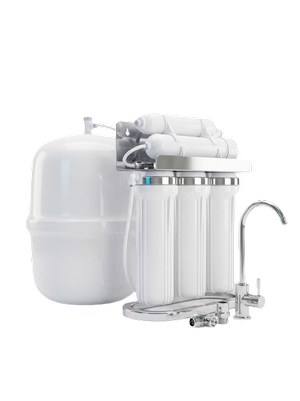
Your system's manual may allow longer, but on chloramine-treated water we don't recommend stretching the carbon stage. On a private well, or on hard water with no softener ahead of the RO, plan on shorter intervals. A free water test shows how hard your water is and whether iron or sulfur will load the filters faster.
Local Water
Why Carbon Pre-Filters Matter More on South Florida City Water
Boca Raton, Delray Beach, West Palm Beach and Palm Beach County Water Utilities all disinfect with chloramine for most of the year, according to the utilities.
Chloramine stays active in the pipes longer than plain chlorine, and ordinary carbon removes it more slowly, so a carbon pre-filter on city water here gets used up sooner than the label suggests.
The membrane can't tell you when that happens. A spent carbon filter looks the same as a new one, and the water from the RO faucet still tastes fine for a while. Meanwhile chloramine is reaching the membrane and slowly breaking down its thin-film layer. By the time TDS rises, you are paying for a membrane instead of a $40 to $60 filter change. So we keep the carbon stage on a fixed 6-month schedule here.
These utilities also switch to free chlorine for a few weeks at a time as routine pipe maintenance. Boca Raton's most recent switch ran from April 12 to April 26, 2026, and the city reminded customers with home treatment systems set up for chloramine to take the change into account. You may notice a stronger chlorine smell at other taps during those weeks. A working carbon pre-filter handles free chlorine as well.
If you already have a whole house carbon filter, it takes most of the chloramine out before water reaches the kitchen, which helps the RO pre-filters and membrane last.
Warning Signs
Signs Your RO Filters or Membrane Are Due
Most problems build up slowly, so these are easy to miss.
Pre-filters
- The RO faucet runs slower, or the tank takes much longer to refill.
- The sediment cartridge has turned brown or orange.
- Chlorine taste or smell has come back in the RO water.
- It has been more than 6 months since the last change.
Membrane
- TDS at the RO faucet has risen more than about 10% above the reading taken after the last membrane change.
- Output stays low even with new pre-filters and correct tank pressure.
- The system ran for a long stretch on spent carbon filters.
Something else
- Water keeps running to the drain when the tank is full: usually the check valve or shut-off valve, not a filter.
- A leak at a housing or fitting.
Those last two are repairs. We can fix them on the same visit, or see our water system repairs page.
Pricing
RO Filter Replacement Cost
Prices per service visit for a standard 5-stage under-sink system. You get the exact figure before we start.
| Service | How often | Price |
|---|---|---|
| Pre-filter change (sediment and carbon), with flush and TDS check | Every 6 months | $40–60 per visit |
| Annual service: post-carbon filter, sanitizing, connection check, on-site water test | Every 12 months | $50–80 |
| RO membrane replacement, with before-and-after TDS reading | Every 2–3 years | $80–150 |
The membrane price depends on its size (most home systems use a 50 to 75 GPD membrane) and the brand. Same-day visits are often available, and every filter service is backed by our 90-day workmanship guarantee.
Brands
RO Systems and Brands We Service
We service RO systems of all brands, including Culligan, Kinetico, Aquasana and APEC, and standard 10-inch filter housings from any maker. It doesn't matter who installed the system.
Not sure what you have? Send us a photo of the system under your sink and we'll identify it and find the right replacement filters at no charge. Some brands use proprietary twist-in cartridges, so we need the model.
Do It Yourself
Changing RO Filters Yourself
Pre-filters on a standard system are a reasonable DIY job.
- Close the cold water feed to the RO and the valve on top of the tank, then open the RO faucet to release pressure.
- Unscrew the pre-filter housings with the housing wrench, remove the old cartridges and wash the housings.
- Check each O-ring, apply a little food-grade silicone grease and seat it in its groove.
- Fit the new cartridges, tighten the housings by hand plus a quarter turn with the wrench, and reopen the feed and the tank valve.
- Check for drips, then flush the system as described below.
Membranes are more fiddly: the housing has to come apart, the new membrane must face the right way and seat fully, and the system needs a longer flush. A poorly seated membrane is a common reason TDS stays high after a change. If you would rather not handle it, or the housings are stuck, we can do it.
For a stage-by-stage maintenance plan, see our RO membrane and filter maintenance schedule.
After the Change
What to Do After an RO Filter Change
Flush the new filters
After new pre-filters, let the tank fill completely, then drain the whole tank through the RO faucet and let it refill before you drink from it. That first tank carries loose carbon dust and any air from the open housings. After a new membrane, drain the first 2 to 3 full tanks, or follow your manufacturer's flush instructions if they ask for more. New membranes ship with a preservative that has to be rinsed out.
If the RO isn't working after the change
- No water or a trickle: the valve on top of the tank or the feed valve is often still closed. If both are open, a cartridge may not be seated, or the new sediment filter is the wrong size.
- Sputtering faucet: air in the lines. It clears after the first tank or two.
- Drip at a housing: an O-ring is twisted, dry or out of its groove. Release pressure, reseat it with a little silicone grease and retighten.
- Black specks or a carbon taste: carbon fines from the new filters. Drain another tank.
- TDS still high after a new membrane: the membrane may not be pushed fully into its housing. Reseat it and test again after 24 hours.
If none of these fix it, call us and we'll check it on a service visit.
Reminders
Filter Reminders and Delivery
We keep each customer's filter dates on file and remind you when the next change is due. If you prefer to change the pre-filters yourself, we can ship a complete annual kit (sediment, carbon and post-carbon, typically $40–60). A subscription with automatic delivery saves 15%.
For softeners, whole house filters and UV systems, our water filter maintenance service covers the rest of your equipment on the same schedule.
Service Area
Where We Replace RO Filters
We service reverse osmosis systems throughout Palm Beach, Broward and Martin County. See the full list of areas we serve.
Thinking about a new system instead? Our reverse osmosis system installation page covers prices and sizing.
Book an RO Filter ChangeCustomer Reviews
What Our Customers Say
From 173 Google reviews of Water Wizards, rated 5.0. A few from our customers:
Will and Jared just completed installing a filtration system in my kitchen. They were highly professional, courteous, clean and very pleasant to work with.
Water Wizards Filtration was great. Easy to work with, showed up on time, and the water quality is noticeably better.
Extremely professional, friendly, and efficient. I highly recommend them! Don't let other companies fool you — this team truly knows what they're doing.
RO Filter Replacement FAQs
Short answers to the questions homeowners ask most about changing RO filters.
-
Sediment and carbon pre-filters every 6 months, the post-carbon filter every 12 months and the membrane every 2 to 3 years. On South Florida city water, which mostly uses chloramine, keep the carbon pre-filter on the 6-month schedule even if the system seems fine.
-
No. The sediment and carbon pre-filters are changed together every 6 months, the post-carbon filter once a year and the membrane every 2 to 3 years. Many people line the post-carbon change up with every second pre-filter change so there is one visit a year that covers both.
-
With Water Wizards, a pre-filter change is $40 to $60 per visit, the annual service is $50 to $80 and a membrane replacement is $80 to $150. If you change the filters yourself, a full annual kit is about $40 to $60.
-
Use a handheld TDS meter on a glass of tap water and a glass from the RO faucet. The RO reading should be a small fraction of the tap reading. If it creeps up over time compared with the reading after your last membrane change, the membrane is wearing out. We take both readings on every visit.
-
Measure TDS at the RO faucet. If it is more than about 10% above the reading after the last membrane change, and new pre-filters haven't helped, the membrane is worn. Slow output with correct tank pressure is another sign.
-
The sediment filter clogs and output drops. Once the carbon pre-filter is spent, chloramine reaches the membrane and damages it, so a cheap filter change turns into a membrane replacement. The water may still taste fine while this happens.
-
Yes, pre-filters on a standard housing system are a short job with a housing wrench. Membranes take more care, and we're happy to handle them.
-
Yes, in the parts that stay wet between uses, like the housings, tubing and storage tank, especially when filters are overdue. That is why our annual service includes sanitizing the system along with the post-carbon change.
-
Yes. We service all brands, wherever you bought the system. Send a photo if you're not sure which filters it takes.
-
Under-sink systems are most of what we do. Call us with the model of a countertop or whole house RO system and we'll tell you whether we stock its filters.