
Whole House Filtration
Whole House Water
Filtration in South Florida
A catalytic carbon system on your main water line, designed to reduce chloramine, its taste and smell, and disinfection byproducts at every tap and shower. Installed across Palm Beach, Broward and Martin County, from $1,495.
Get a Free Water TestWhole-Home Protection
Every tap, shower and appliance, filtered at the main line
Built for Chloramine
Catalytic carbon sized for the disinfectant most utilities here use
Same-Day Installation
Professional install across Palm Beach, Broward & Martin
5-Year Warranty
Plus scheduled filter and carbon changes from our service team
Whole House Water Filtration for South Florida Homes
One system on the main line that treats the water for every tap, shower and appliance.
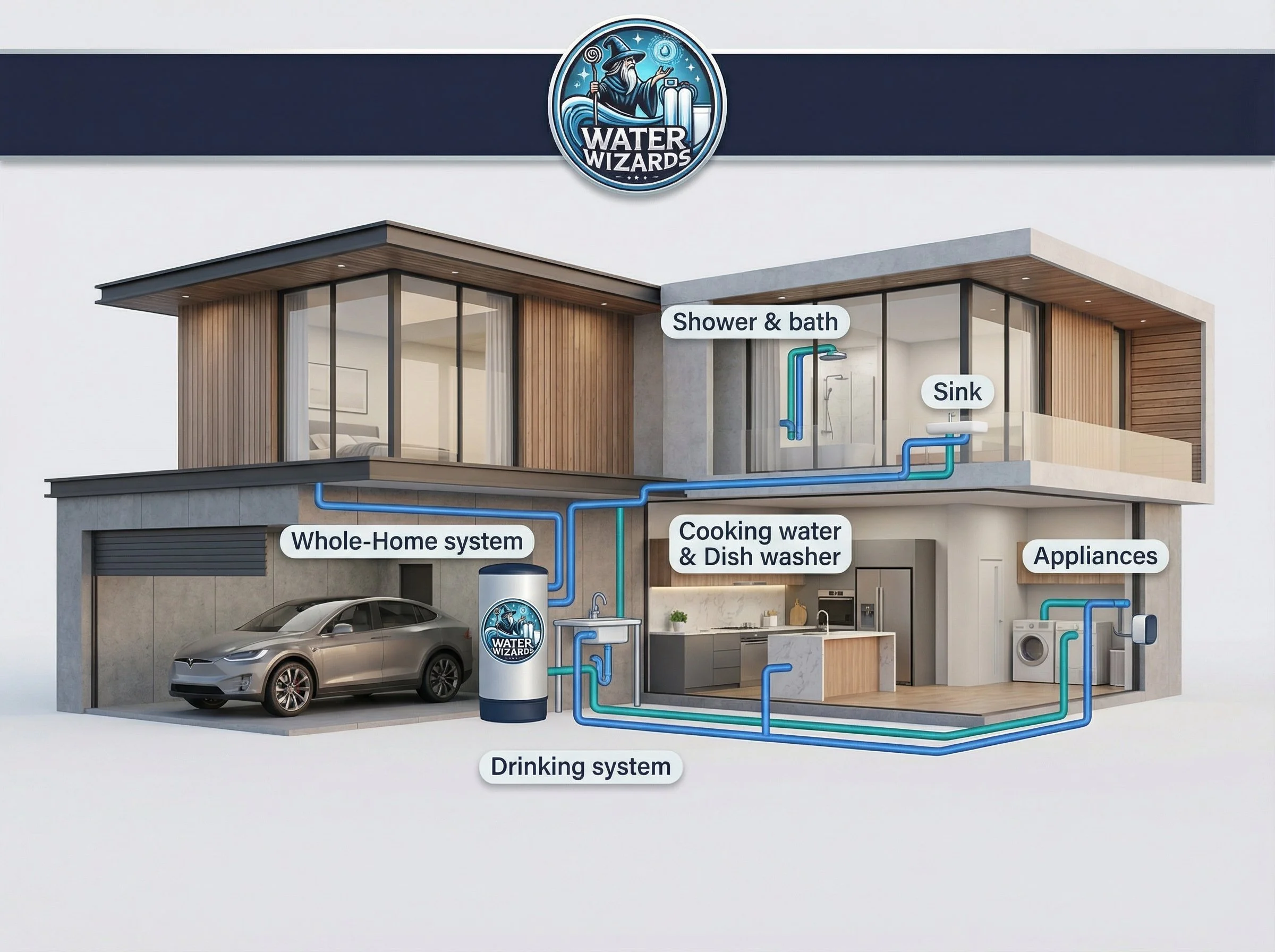
What Is Whole House Water Filtration?
A whole house water filtration system, also called a point-of-entry (POE) system, sits on the main water line where it enters your home, so every faucet, shower, washing machine and hose gets filtered water. On South Florida city water its main job is chloramine, the disinfectant most utilities here use: a sediment pre-filter and a catalytic carbon tank handle it.
A point-of-use filter, like reverse osmosis under the kitchen sink, treats one faucet. The two work together. Whole house carbon covers showers and laundry, and RO covers the water you drink and cook with.
Water Quality
What a Whole House Filter Removes
It depends on the stages you choose. Carbon handles the disinfectant side of city water. Lead, PFAS and germs need a different stage.
Carbon Stage
- Chlorine & chloramines
- Disinfection byproducts (TTHM, HAA5)
- Chlorine taste and smell
- Volatile organic compounds
- Pesticides and herbicides
Drinking-Water Stage
- Lead
- PFAS (PFOA, PFOS)
- Chromium-6
- Arsenic
- Nitrates
Sediment Stage
- Sediment & dirt
- Rust particles
- Sand & silt
- Grit after main breaks and repairs
- Turbidity & cloudiness
UV Stage (Wells)
- Bacteria such as E. coli
- Viruses
- Cysts such as Giardia
- Coliform
- Other microbes
Local Water
Chloramine in Palm Beach and Broward City Water
Most city utilities here disinfect with chloramine, chlorine bound to ammonia. It lasts longer in the pipes than plain chlorine, and it takes catalytic carbon with enough contact time to remove at home.
| Utility | Disinfectant | Reported level |
|---|---|---|
| City of Boca Raton | Chloramine | 2.0–3.5 mg/L, from the City's water quality page, checked November 2026 |
| Palm Beach County Water Utilities (eastern system) | Chloramine, switched to free chlorine twice a year | 3.04 ppm average (range 0.07–4.53) in the latest water quality report |
| City of Fort Lauderdale | Chloramine | 2.3 ppm average (range 1.9–2.8) in the 2025 water quality report |
These levels are within the EPA's 4 mg/L limit for chloramine, so the water is legal to drink. The reasons people filter it are the taste and smell, chloramine in shower steam, and the byproducts that form when the disinfectant reacts with organic matter. Palm Beach County Water Utilities also says chloramine must be removed from water used for kidney dialysis and aquariums.
Pool smell some weeks? That's usually the utility's scheduled switch to free chlorine. A carbon system handles both, so you stop noticing it.
Get a Free Water TestWhy Choose Us
Benefits of Whole House Water Filtration
What changes when the water for every tap and shower goes through carbon first.
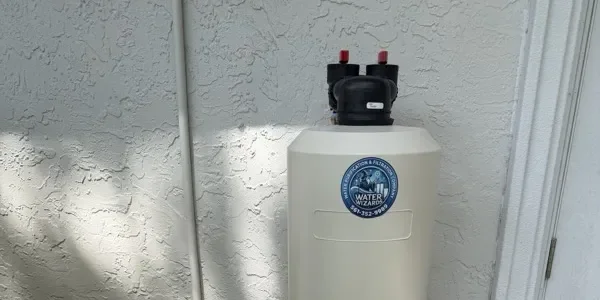
Less Chloramine and Byproducts
Catalytic carbon is designed to reduce chloramine and the disinfection byproducts that form in treated city water, at every faucet and shower.
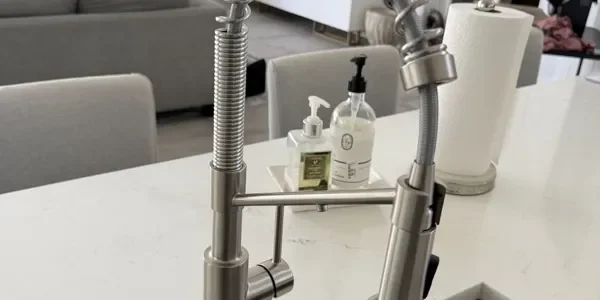
Fewer Bottled-Water Runs
Water from the kitchen tap tastes clean enough for coffee and ice, and adding reverse osmosis covers drinking water too.
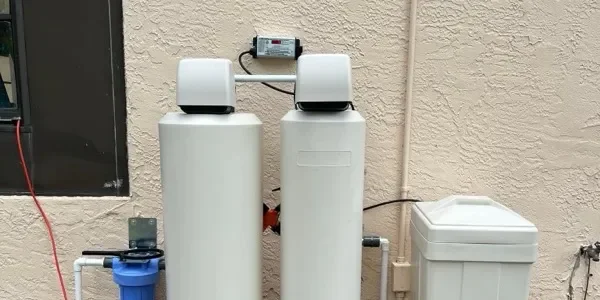
Whole Home Protection
A point-of-use filter treats one faucet. A whole house system treats the water once at the main line, so showers, laundry and the hose all get it.

Better Taste & Odor
No pool smell in the shower or bleach taste in the glass, including the weeks when utilities switch to free chlorine.
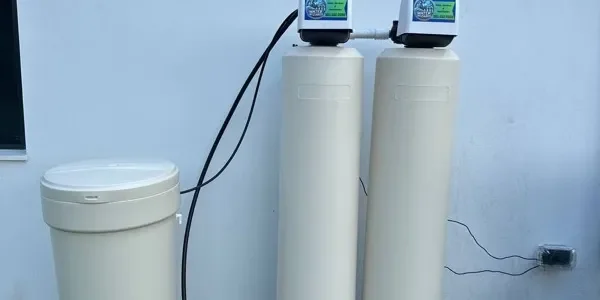
Softer Skin & Hair
Showers without the chlorine smell. Many people notice their skin and hair feel less dry once the disinfectant is out of the water.
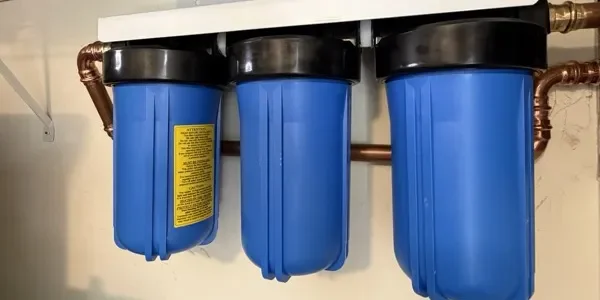
Cleaner Valves and Aerators
The sediment stage keeps sand and grit out of washer valves, aerators and showerheads. For scale from hardness, add a softener.
How It Works
How Whole House Water Filtration Works
Water passes through each stage on the main line before it splits off to the rest of the house.
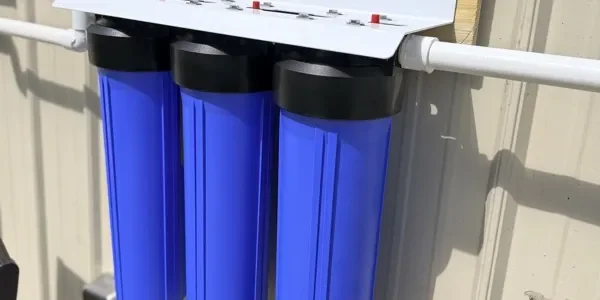
Sediment Filter
Catches sand, rust and grit first, so the carbon bed behind it doesn't clog. After storm season or a main repair, this is the stage that works hardest.
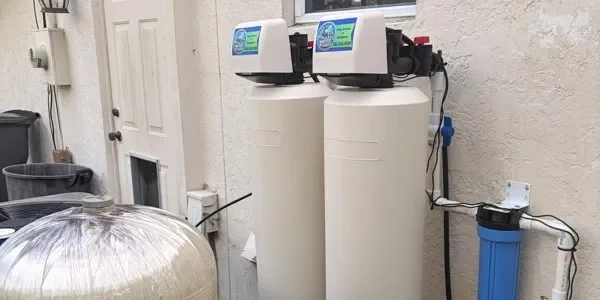
Carbon Filter
Catalytic carbon designed to reduce chloramine, chlorine taste and smell, and disinfection byproducts. Chloramine needs more contact time than chlorine, so we size the tank to your home's peak flow.
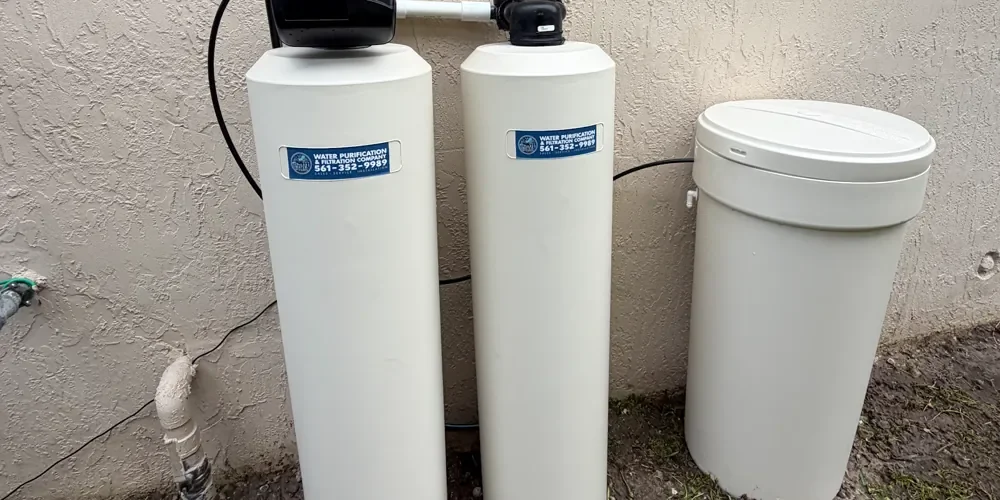
Add-Ons for Your Water
A water softener after the carbon if your hardness calls for one, UV for private wells, and reverse osmosis at the kitchen sink for drinking water.
Installation Cost
Whole House Water Filtration Cost
A catalytic carbon whole house system installed by Water Wizards starts at $1,495 for a typical city-water home. You get one written price after the free water test, before any work starts. For a line-by-line breakdown, see our guide to whole house water filtration cost in Florida.
Larger homes need a bigger carbon tank. Carbon, a softener and reverse osmosis installed together run $3,200 to $5,500. Well water is quoted after the test. Financing is available.
Sediment + catalytic carbon
The standard setup for city water. Carbon sized to your peak flow handles chloramine, its taste and smell, and byproducts at every tap.
Most city homesCarbon + softener + RO
Carbon first, a softener after it for scale, and reverse osmosis under the kitchen sink for drinking water. Installed together, $3,200 to $5,500.
Complete systemWell water system
For private wells. Iron and the rotten-egg smell come out first, then carbon or a softener as your test calls for, with UV if bacteria are a concern.
Quoted after the testWhat the price includes
- Free water test at your tap
- Sizing from your home's peak flow and bathrooms
- Sediment pre-filter and catalytic carbon tank
- Bypass valve so the system can be serviced without shutting off the house
- Installation on the main line and a check of flow and pressure
- A 5-year warranty
What moves the price up or down
- Home size and peak flow, which set the carbon tank size
- Adding a softener or reverse osmosis
- Well water that needs iron or sulfur treatment
- Where the main line enters and how easy it is to reach
- Whether the main is in a garage, a side yard or a utility room
Customer Reviews
What Our Customers Say
From 173 Google reviews of Water Wizards, rated 5.0. A few from our customers:
Water Wizards Filtration was great. Easy to work with, showed up on time, and the water quality is noticeably better.
Water Wizards were fantastic! Called them Friday morning, they were out that afternoon with a quote. Job completed Monday, everything working perfectly.
These guys are young but they are amazing. They have an old school way of working and it is quite refreshing. The same system I installed was quoted by another company at 2.5X the price. Ask for Jared.
Whole House Water Filtration FAQs
-
A catalytic carbon whole house system installed by Water Wizards starts at $1,495 for a typical city-water home. Bigger homes with more bathrooms need a larger carbon tank, which raises the price. Carbon, a softener and reverse osmosis installed together run $3,200 to $5,500, and well-water systems are quoted after the test. You get one written price before we start, and financing is available.
-
It sits on the main water line where water enters your home, so every faucet, shower and appliance gets filtered water. Water passes a sediment pre-filter that catches sand and rust, then a tank of catalytic carbon that reduces chloramine, chlorine taste and smell, and disinfection byproducts. A bypass valve lets the system be serviced without shutting off the house.
-
You don't need one for safety: South Florida utilities meet federal drinking water rules. People add one for what's left after treatment. That means the chloramine taste and smell, chloramine in shower steam, and disinfection byproducts. Boca Raton lists chloramine at 2.0 to 3.5 mg/L. If those bother you, a carbon system at the main line handles all of them at once.
-
Yes, if it uses catalytic carbon sized for it. Standard carbon removes chlorine well but needs much more contact time for chloramine, which is chlorine bound to ammonia. Catalytic carbon is processed for that job, and the tank has to be big enough that water stays in it long enough at your home's peak flow. That's why we size from bathrooms and flow, not from a catalog label.
-
Most likely your utility's scheduled switch to free chlorine. Palm Beach County Water Utilities changes from chloramine to free chlorine twice a year to clean the mains, and says so in its annual water quality report. The water stays safe, but the smell is stronger for a couple of weeks. A catalytic carbon system takes out both, so you stop noticing the switch.
-
Not reliably. Whole house carbon is designed for the disinfectant side of city water. For PFAS, lead and chromium-6 in drinking water, use reverse osmosis at the kitchen sink, which is designed to reduce them. Fluoride is less of an issue than it used to be: Florida stopped adding it to public water in July 2025, so what's left is the small natural amount.
-
No. Carbon and sediment filters don't take out calcium and magnesium, so scale on glass and fixtures stays. For that you need a water softener, usually installed right after the carbon so the carbon also protects the softener resin from chloramine. Many South Florida city utilities soften at the plant, so test first. Your hardness may already be low.
-
A correctly sized one shouldn't cause a drop you notice. Pressure loss comes from undersized tanks and clogged sediment cartridges. We size the system to your home's peak flow, the showers and appliances that run at the same time, and check flow and pressure after installation. If pressure drops later, the sediment cartridge usually needs changing.
-
The sediment cartridge usually needs changing every 3 to 6 months, sooner after storm season or main repairs. Catalytic carbon lasts much longer. It is replaced based on how much water your home uses and on taste and smell coming back. We track both and handle the changes through our filter maintenance service.
-
They do different jobs. A whole house filter treats all the water at the main line for chloramine, taste, smell and byproducts, including showers and laundry. Reverse osmosis treats the water at one kitchen faucet and is designed to reduce dissolved contaminants like lead, PFAS and salts. Many homes use both: carbon for the house, RO for drinking and cooking.
-
Well water needs a different setup. Private wells in western Palm Beach County often carry iron and hydrogen sulfide (the rotten-egg smell), and they get no disinfection. So the system starts with iron and sulfur treatment, then carbon or a softener as your test calls for, and UV if bacteria are a concern. We test iron, pH and hardness first and quote after the test.
-
Only if you can reach the water line that feeds your unit alone. Many townhomes have it in the garage or a utility closet, which works. In high-rises the line is often a shared riser you can't change, so reverse osmosis at the kitchen sink is the usual answer. Send us a photo of where your water comes in and we'll tell you which applies. Our condo water filtration page covers what fits each type of building.
-
Most whole house installs are done in one visit. We shut off the water, cut in on the main line with a bypass valve, set the sediment and carbon tanks, flush the carbon and check flow before we leave. A system that also includes a softener or reverse osmosis takes longer. In most homes we can test and install on the same day.
-
You can if you're comfortable cutting into the main line, but the result depends on sizing. An undersized carbon tank won't remove chloramine at peak flow, and a tank without a bypass valve is hard to service. Our installs start with a water test, are sized to your home's flow, and come with a 5-year warranty.