Reverse Osmosis Installation in Boca Raton: Why Your Tap Water Needs Treatment
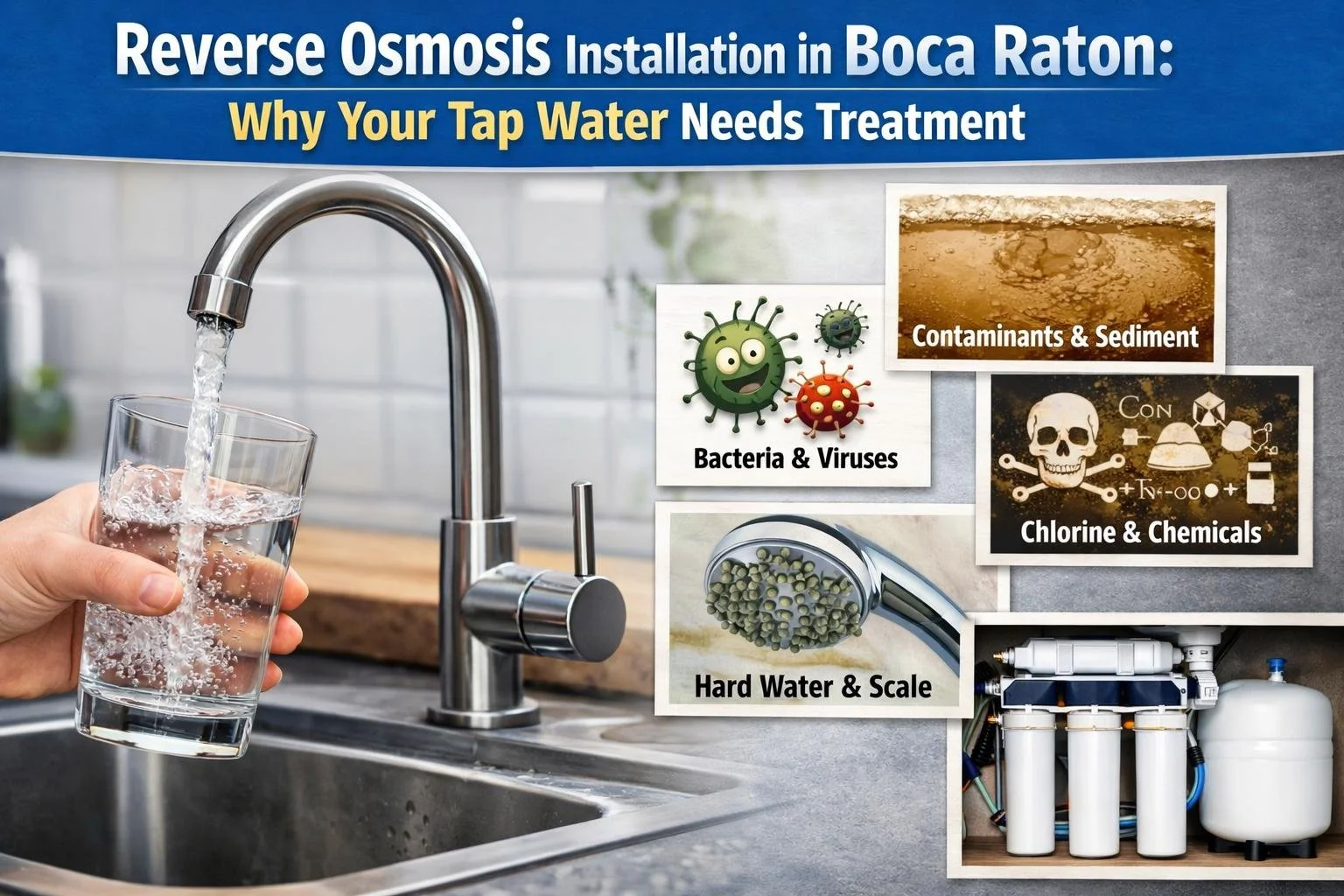
A local guide to Boca Raton's water quality issues and how RO systems provide the solution
Living in Boca Raton means enjoying beautiful beaches, world-class golf courses, and some of the finest dining in South Florida. What it doesn't mean is having ideal tap water straight from the faucet.
If you've noticed that your drinking water tastes off, leaves spots on everything, or just doesn't feel quite right, you're not imagining things. Boca Raton's water, like much of South Florida, presents some real challenges that most homeowners don't fully understand until they look at the data.
I've installed water treatment systems throughout Palm Beach County for years, and I can tell you: Boca Raton residents have legitimate reasons to consider reverse osmosis systems for their homes. Let me walk you through exactly what's in your water and why RO is the most effective solution for clean, great-tasting drinking water.
Safe to Drink?
Where Boca Raton's Water Comes From
Your tap water originates from the Biscayne Aquifer, a shallow groundwater system that serves as the primary drinking water source for millions of South Florida residents. The City of Boca Raton operates a modern 70 million-gallon-per-day water treatment facility on Glades Road that processes this groundwater before it reaches your home.
The Biscayne Aquifer sits beneath ancient limestone bedrock and coral formations — geological features that define South Florida's landscape. As water percolates through these mineral-rich deposits, it picks up calcium, magnesium, and other dissolved minerals. This is why hardness is an inherent characteristic of our water supply.
The treatment plant uses membrane softening and lime softening processes to reduce hardness and remove impurities. Chlorine or chlorine dioxide is added to disinfect the water and keep it safe as it travels through miles of pipes to your home.
This treatment makes the water legally safe to drink. But "legally safe" and "ideal for your family" aren't necessarily the same thing.
What's Actually in Boca Raton Tap Water?
The City tests for over 100 contaminants and publishes an annual Consumer Confidence Report. According to official testing data and third-party analysis, here's what we're dealing with:
Hardness: 189 ppm (11 gpg)
Boca Raton's water hardness measures approximately 189 parts per million, or about 11 grains per gallon. This puts it firmly in the "hard" to "very hard" category. While the treatment plant reduces hardness somewhat, significant mineral content remains.
Hard water isn't a direct health threat, but it affects taste, leaves mineral deposits, and can interfere with how well soap and detergents work.
Disinfection Byproducts
When chlorine reacts with naturally occurring organic matter in water, it creates disinfection byproducts (DBPs). Two categories are particularly relevant:
Trihalomethanes (TTHMs): These compounds, including chloroform and bromodichloromethane, form during the chlorination process. While Boca Raton's levels meet EPA legal limits (80 ppb), they exceed the more stringent health guidelines set by organizations like the Environmental Working Group. Long-term exposure to elevated THMs has been linked to increased cancer risk.
Haloacetic Acids (HAA5): Another group of chlorination byproducts, HAA5 compounds are also present in Boca Raton's water. The EPA limit is 60 ppb, but health advocacy groups recommend much lower levels.
Chlorate
Chlorate forms as a byproduct when chlorine dioxide is used for disinfection. Testing has found chlorate in Boca Raton's water supply at levels that exceed some health guidelines. Chlorate can affect thyroid function, making it a particular concern for pregnant women and young children.
Chromium-6 (Hexavalent Chromium)
This is the "Erin Brockovich chemical" that gained notoriety for contaminating water supplies near industrial sites. Chromium-6 has been detected in Boca Raton's water. While levels are below outdated federal limits, they exceed the health guidelines established by California's Office of Environmental Health Hazard Assessment, which recommends a public health goal of 0.02 ppb.
PFAS: The "Forever Chemicals"
Per- and polyfluoroalkyl substances (PFAS) are perhaps the most concerning emerging contaminants in South Florida water. Research from Florida International University has detected approximately 30 different PFAS compounds in tap water samples from Miami-Dade, Broward, and Palm Beach counties, with higher concentrations found near airports.
In April 2024, the EPA established Maximum Contaminant Levels of 4 parts per trillion for PFOS and PFOA — two of the most studied PFAS compounds. Recent testing in Palm Beach County has found levels exceeding these thresholds in some water systems. A 2024 University of Florida study found PFAS in 63% of Florida's freshwater springs, highlighting how widespread this contamination has become.
PFAS exposure has been linked to cancer, thyroid disease, immune system effects, and developmental problems. These chemicals don't break down naturally and can accumulate in the body over decades.
The Bottom Line on Boca Raton Water Quality
Your water meets EPA legal standards — the city does its job and complies with federal regulations. But here's what many people don't realize: EPA drinking water standards haven't been comprehensively updated in almost 20 years. Legal limits often lag behind current scientific understanding of health risks.
Independent analyses give Boca Raton's water quality middling grades. Multiple contaminants exceed health-based guidelines even when they're below legal limits. For families concerned about long-term health, especially those with children, pregnant women, or immunocompromised members, additional treatment makes sense.
Why Reverse Osmosis Is the Right Solution
You have options for treating drinking water: pitcher filters, faucet-mounted filters, refrigerator filters, or whole-house filtration. But for addressing the full spectrum of contaminants found in Boca Raton water, reverse osmosis stands apart.
How RO Works
Reverse osmosis forces water through a semipermeable membrane with microscopic pores. These pores are small enough to block most contaminants while allowing water molecules to pass through. A quality RO system typically includes multiple filtration stages:
Stage 1 — Sediment Pre-Filter: Removes particles like sand, rust, and debris that could damage the membrane.
Stage 2 — Carbon Pre-Filter: Removes chlorine (which can degrade RO membranes), organic compounds, and improves taste.
Stage 3 — RO Membrane: The heart of the system. This membrane rejects 90-99% of dissolved contaminants.
Stage 4 — Post-Filter/Polishing Filter: A final carbon stage for any remaining taste or odor issues.
Some systems add a fifth stage for remineralization, adding back beneficial minerals like calcium and magnesium for improved taste.
What RO Removes
The effectiveness of reverse osmosis against Boca Raton's specific water concerns is impressive:
ContaminantRO Removal RatePFAS (PFOA, PFOS) 90-99% Chromium 95-99% Trihalomethanes 85-95% Haloacetic Acids 85-95% Chlorine/Chloramine 95-99% Lead 95-99% Arsenic 95-99% Dissolved Solids (Hardness) 90-98% Bacteria & Viruses 99%+
According to the EPA, reverse osmosis is one of the most effective methods for removing PFAS from drinking water. Studies show well-maintained RO systems can eliminate 94-99% of short-chain PFAS and 88-100% of long-chain PFAS.
This comprehensive removal capability is why RO outperforms simpler filtration methods. Pitcher filters and faucet filters use activated carbon, which helps with chlorine and taste but struggles with many dissolved contaminants. RO addresses the full spectrum.
The Taste Difference
Beyond health concerns, many Boca Raton homeowners simply want water that tastes better. The combination of minerals, chlorine, and treatment chemicals gives tap water a distinctive flavor that many find unappealing.
RO water tastes clean and pure — no mineral aftertaste, no chlorine smell, no "swimming pool" flavor. Once you drink RO water for a week, going back to tap water becomes difficult. Coffee tastes better. Ice cubes are crystal clear. Cooking water doesn't affect recipes.
Under-Sink vs. Whole-House: Which Makes Sense?
When considering RO for your Boca Raton home, you have two primary options:
Under-Sink (Point-of-Use) RO Systems
These compact systems install beneath your kitchen sink and provide purified water through a dedicated faucet. They're the most popular choice for homeowners who want high-quality drinking and cooking water.
Advantages:
Lower cost ($200-800 for quality systems, plus installation)
Treats only the water you actually drink
No impact on water pressure throughout the house
Easier maintenance
Can be installed in a few hours
Best for: Most Boca Raton homeowners who want pure drinking water without treating their entire water supply.
Whole-House RO Systems
These larger systems treat all water entering your home. Every faucet, shower, and appliance receives RO-treated water.
Advantages:
Pure water throughout the home
No chlorine exposure during showers (reduces skin and hair issues)
Protects all appliances from contaminants
Disadvantages:
Significantly higher cost ($3,000-12,000+)
Higher water waste (RO systems produce wastewater during filtration)
May require a water pressure booster
Removes minerals beneficial for pipes (can increase corrosion if not properly managed)
Best for: Homes with severe contamination issues, families with significant chemical sensitivities, or those who want comprehensive treatment.
Our Recommendation for Most Boca Raton Homes
For the majority of homeowners, an under-sink RO system for drinking and cooking water, combined with a whole-house water softener and carbon filtration, provides the best balance of protection, cost, and practicality.
The softener handles hardness throughout your home, protecting appliances and improving soap performance. The carbon filter removes chlorine before it reaches showers and faucets. The under-sink RO provides pristine drinking water without the expense and complexity of a whole-house RO.
What to Look for in an RO System
Not all reverse osmosis systems are created equal. Here's what matters:
Certification
Look for NSF/ANSI Standard 58 certification, which verifies the system has been independently tested for contaminant reduction. For PFAS removal specifically, NSF/ANSI Standard 53 certification is also relevant.
Membrane Quality
The RO membrane is the critical component. Higher-quality membranes last longer and provide better rejection rates. Expect to replace membranes every 2-3 years with normal use.
Pre-Filter Design
Quality pre-filters protect the membrane and improve system lifespan. Systems with sediment and carbon pre-filters will perform better and require less frequent membrane replacement.
Tank vs. Tankless
Traditional RO systems include a storage tank that holds filtered water for on-demand use. Tankless systems filter water in real-time without storage. Tank systems provide faster flow rates; tankless systems save space and eliminate potential bacterial growth in standing water.
Efficiency Ratio
Older RO systems wasted 4-6 gallons of water for every gallon of purified water produced. Modern high-efficiency systems achieve ratios closer to 1:1 or 2:1, significantly reducing water waste.
Remineralization
Because RO removes beneficial minerals along with contaminants, some systems include a final stage that adds back calcium, magnesium, or alkalizing minerals. This improves taste and addresses concerns about drinking demineralized water.
Professional Installation vs. DIY
Under-sink RO systems can be installed by capable DIYers, but professional installation offers significant advantages:
Proper Sizing: A professional evaluates your water conditions and household usage to recommend the right system.
Correct Placement: Installation location affects performance and accessibility for filter changes.
Plumbing Connections: Proper connections prevent leaks and ensure adequate water pressure.
Water Line to Refrigerator: Many homeowners want RO water routed to their refrigerator for ice and water dispensers. This requires additional plumbing.
System Testing: Professionals test the installed system to verify proper operation and contaminant removal.
Warranty Protection: Improper DIY installation can void manufacturer warranties.
For whole-house RO or systems that integrate with other water treatment equipment, professional installation is essentially mandatory.
Maintenance: What to Expect
RO systems require ongoing maintenance to perform properly:
Pre-filters (every 6-12 months): Sediment and carbon pre-filters should be replaced regularly. In Boca Raton's water, you may find yourself changing these closer to every 6 months.
RO Membrane (every 2-3 years): The membrane itself lasts longer but does need periodic replacement. Water quality and usage affect membrane lifespan.
Post-filters (every 12 months): The final polishing filter should be changed annually.
Tank Sanitization (annually): If your system has a storage tank, annual sanitization prevents bacterial growth.
Cost: Budget approximately $100-200 per year for replacement filters and periodic maintenance.
Neglecting maintenance doesn't just reduce water quality — it can damage the membrane and lead to costly repairs. Set calendar reminders or work with a service company that handles maintenance automatically.
Addressing Common Concerns
"Doesn't RO Waste a Lot of Water?"
Older systems did. Modern high-efficiency RO systems have dramatically reduced water waste. When you consider that you're treating only drinking and cooking water (not the 80+ gallons per person used daily for bathing, laundry, and irrigation), the total water use is quite modest.
"I Heard RO Removes Healthy Minerals"
It's true that RO removes calcium and magnesium along with contaminants. However, we get the vast majority of these minerals from food, not water. If this concerns you, choose a system with remineralization or add mineral drops to your RO water.
The minerals removed are the same ones that cause hardness — the same minerals you'd remove with a water softener anyway. The health benefits of removing PFAS, lead, and disinfection byproducts far outweigh any mineral loss.
"Is RO Water 'Dead' or Unhealthy?"
No. This is a persistent myth. RO water is simply H2O with most dissolved substances removed. It's not acidic, not harmful, and not "dead." Millions of people worldwide drink RO-treated water daily without any health issues.
"Isn't Boca Raton Water Already Treated?"
Yes, and it meets legal standards. But as we've discussed, legal standards don't always reflect current health science. Municipal treatment also can't address contamination that occurs between the treatment plant and your tap, including lead from older plumbing or bacterial growth in aging pipes.
The Cost of Not Treating Your Water
Consider what you might be spending now:
Bottled water: A family of four drinking recommended amounts might spend $50-100+ monthly on bottled water
Appliance damage: Hard water and chlorine degrade water heaters, coffee makers, and other appliances
Health costs: The long-term health effects of chronic exposure to contaminants are difficult to quantify but potentially significant
An under-sink RO system with professional installation costs $500-1,500 upfront and roughly $150/year to maintain. Over five years, that's approximately $1,000-2,250 total — likely less than bottled water alone, with better water quality and far less plastic waste.
How Water Wizards Can Help
We specialize in water treatment solutions for South Florida homes. Here's what we offer Boca Raton residents:
Free Water Testing
We'll test your water at no charge and show you exactly what's in it — hardness levels, chlorine, and a screening for common contaminants. No guessing, no assumptions, just data.
Honest Recommendations
We'll tell you what you actually need. Not every home requires the same solution. Some may benefit from RO alone; others might need a combination of softening, carbon filtration, and RO. We design systems around your specific water conditions and concerns.
Quality Equipment
We install reliable, NSF-certified reverse osmosis systems from reputable manufacturers. Our systems are sized appropriately for South Florida water conditions and built to last.
Professional Installation
Our technicians handle everything correctly — proper placement, secure plumbing connections, refrigerator line routing if desired, and thorough testing before we leave.
Ongoing Support
We're here for filter changes, maintenance, and any questions that come up. Water treatment isn't set-and-forget; we make sure your system keeps performing year after year.
Frequently Asked Questions
How long does RO installation take?
Under-sink installations typically take 2-4 hours, including testing. If we're routing a line to your refrigerator or integrating with other equipment, it may take slightly longer.
Will RO affect my water pressure?
RO systems include their own storage tank, so the flow rate at the dedicated faucet is independent of your home's water pressure. You won't notice any change to pressure elsewhere in the house.
Can I connect RO to my refrigerator's ice maker?
Yes, this is a common request. We can route a line from your RO system to your refrigerator so you have purified water for ice cubes and the water dispenser.
How often do filters need changing?
Pre-filters: every 6-12 months. Post-filter: annually. RO membrane: every 2-3 years. We can set up a maintenance schedule so you never have to think about it.
Does RO water taste different?
Yes — it tastes cleaner. No mineral aftertaste, no chlorine smell. Most people find RO water significantly more pleasant to drink than tap water.
What happens to the contaminants the system removes?
They're flushed down the drain along with the wastewater that's produced during the filtration process. They don't accumulate in your home.
Is RO water safe for babies and formula?
Yes. In fact, many pediatricians recommend using purified water for infant formula to avoid exposure to contaminants like fluoride, lead, or nitrates.
Do you service areas outside Boca Raton?
We serve all of Palm Beach County and Broward County, including Delray Beach, West Palm Beach, Fort Lauderdale, Coral Springs, and surrounding communities.
Concerned about what's in your Boca Raton tap water? Contact Water Wizards for free water testing and an honest assessment of your options. We'll show you exactly what you're dealing with and help you find the right solution for your home and budget.