Water Treatment for Florida Fish Farms and Aquaculture Operations
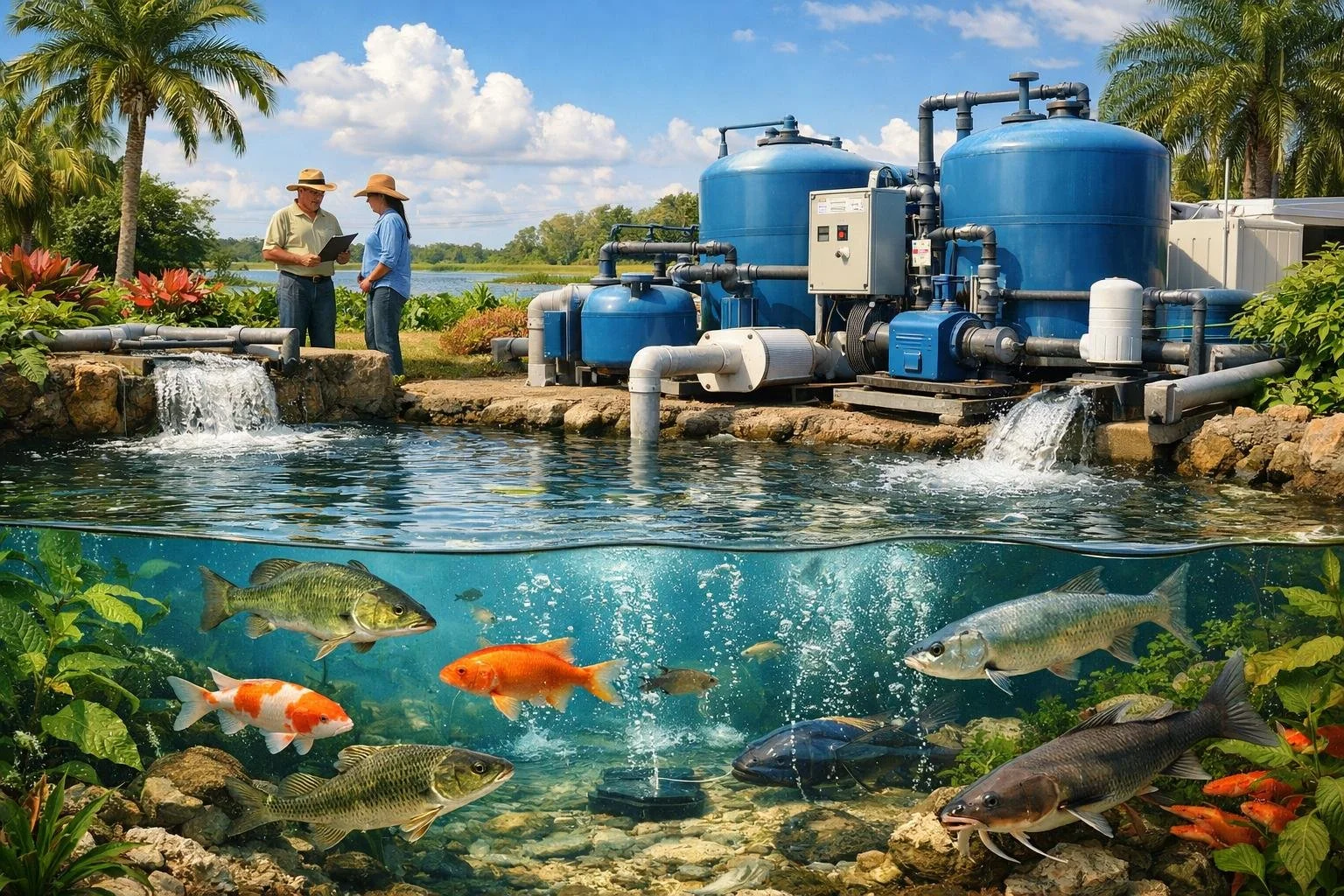
By Jared Beviano, Owner of Water Wizards Filtration | January 2025
When I got my first call from a tropical fish farm in Hillsborough County, I realized how much I didn't know about aquaculture. The farm manager explained that he'd been in the business for twenty years, raising angelfish and swordtails for pet stores across the country. His well water had always been "fine" — until it wasn't.
"The fish started dying in one pond, then another," he told me. "Not all at once. Slow losses. By the time we figured out it was the water, we'd lost maybe ten thousand dollars worth of stock."
What changed? Nothing dramatic. Just a gradual shift in his well water chemistry — higher iron, slightly more sulfur — probably from aquifer changes in the area. The fish that had thrived for years suddenly couldn't handle the cumulative stress.
That experience taught me something important. In aquaculture, water isn't just a medium the animals live in — it IS the production environment. Every parameter matters. Small changes compound. And Florida's challenging groundwater creates baseline stresses that can push operations from profitable to struggling.
This guide covers water treatment for Florida's diverse aquaculture industry — from tropical fish farms to tilapia operations, from clam hatcheries to aquaponics facilities. The species and systems differ, but the fundamental principle remains: clean, consistent water is the foundation of everything.
Safe to Drink?
Florida Aquaculture: A National Leader
Florida isn't just participating in aquaculture. We're leading it.
The Industry by the Numbers
Florida's thriving aquaculture industry is a vital part of the state's economy, generating more than $165 million in sales annually and supporting jobs across rural and coastal communities.
Florida had the second-highest number of aquaculture farms in 2023 but ranked fourth in the value of aquaculture product sales, totaling $165.94 million.
The industry is remarkably diverse. Overseen by the Florida Department of Agriculture & Consumer Services (FDACS), the industry includes an estimated 1,500 varieties of food fish, bait fish, mollusks, aquatic plants, alligators, turtles, crustaceans, amphibians, caviar, and ornamental fish.
Ornamental Fish: Florida's Crown Jewel
The hallmark of Florida aquaculture is ornamental, or tropical fish, the saltwater and freshwater species bred for aquariums. In 2023, the sector generated more than $57 million, making the state the country's top pet fish producer.
The dominance is staggering: 95% of ornamental fish in the United States come from the Sunshine State.
Geographic concentration:
Although production is spread throughout the state, the heaviest concentration of farms is in the southern half, with 85% located in Hillsborough and Polk counties near the Tampa area.
The University of Florida (UF)/IFAS Tropical Aquaculture Laboratory (TAL) is located in Ruskin, Florida, in the heart of the ornamental aquaculture industry, with over 130 tropical fish farms within a 30-mile radius of the lab.
Why Tampa Bay?
A warm climate and an abundant supply of groundwater make the environment perfect for raising ornamental fish. Florida is home to an estimated 95% of the U.S. domestic production of aquarium fish and ornamental aquatic plants. This is due to a favorable climate, geology, and the presence of international shipping hubs such as Tampa, Orlando, and Miami International Airports.
Tropical fish are the number one cargo commodity out of Tampa International Airport, where 8,000 to 10,000 boxes are shipped weekly.
Food Fish: A Growing Sector
Between 2018 and 2023, sales rose from $4 million to $26 million, a 550% increase. Some of the most common Florida food fish are tilapia, striped bass, cobia, pompano, and red drum.
Evans Farm of Pierson, Florida, is among the pioneering fish farms in the state. Originally cattle farmers, the company expanded to sell tilapia, striped bass, and caviar harvested from sturgeon.
Shellfish: Cedar Key and Beyond
Shellfish farming — particularly hard clams — represents another major Florida aquaculture sector.
Today, about 150 growers harvest 100-125 million hard clams annually on over 1,000 acres of submerged land leases located off the coasts of Levy and Dixie Counties. It is estimated that Cedar Key produces 90% or more of the state's crop, with a gross revenue impact of $35 million to the region's economy.
Molluscan shellfish aquaculture is the largest food-use aquaculture industry in Florida. Hard clams and Mercenaria dominate the industry.
Why Water Quality Is Everything in Aquaculture
Fish perform all bodily functions in water — eating, breathing, excreting wastes, reproducing, and taking in or removing salts. Water quality within aquaculture ponds can affect these functions and, therefore, will determine the health of the fish and, consequently, the success or failure of a fish farming operation.
This isn't an overstatement. Unlike terrestrial agriculture, where animals can move away from contaminated water or find alternative sources, aquatic species are completely immersed in their environment. Every molecule of water passes over their gills. Every contaminant affects them continuously.
The Critical Parameters
Water quality parameters that are commonly monitored in the aquaculture industry include temperature, dissolved oxygen, pH, alkalinity, hardness, ammonia, and nitrites. Depending on the culture system, carbon dioxide, chlorides, and salinity may also be monitored.
| 🐟 Parameter | Optimal Range | Critical Threshold |
|---|---|---|
| Dissolved Oxygen (DO) | 5-10 mg/L (ppm) | <4 mg/L stress begins |
| pH | 6.5-9.0 | <6 or >9.5 dangerous |
| Ammonia (un-ionized NH₃) | <0.02 mg/L | >0.05 mg/L toxic |
| Nitrite (NO₂) | <0.1 mg/L | >0.5 mg/L dangerous |
| Nitrate (NO₃) | <50 mg/L | >100 mg/L stress |
| Alkalinity | 50-300 mg/L CaCO₃ | <20 mg/L unstable |
| Hardness | 50-400 mg/L CaCO₃ | Varies by species |
| Temperature | 24-30°C (warm water) | Species-dependent |
| Hydrogen Sulfide (H₂S) | <0.003 mg/L | Any detectable level |
| Chlorine | 0 mg/L | >0.003 mg/L toxic |
Dissolved Oxygen: The Most Critical Parameter
Dissolved Oxygen (DO) is considered by most to be the most important water quality parameter in aquaculture.
Fish require oxygen to metabolize food and grow, as do bacteria communities in the biofilter. Although fish can tolerate a drop in dissolved oxygen below 5-6 mg/L for short periods of time, it will lead to significant stress or indeed death if not increased to healthy levels.
Dissolved oxygen levels are strongly related to temperature: the warmer the water, the less oxygen it can hold. This creates particular challenges in Florida's warm climate, where water naturally holds less oxygen exactly when fish metabolic rates (and oxygen demand) are highest.
The Ammonia Problem
Ammonia is the main waste product produced by fish and is regarded as the second most important water quality parameter after dissolved oxygen in intensive fish farming. Even in relatively small concentrations, ammonia can cause significant stress and damage to fish especially bacteriological infections.
The chemistry matters enormously:
Ammonia can exist in two forms: un-ionized (NH₃) and ionized (NH₄⁺), also known as ammonium ion. Un-ionized ammonia is extremely toxic to fish, and ionized ammonia is not, except at extremely high levels. The ratio of NH₃ to NH₄⁺ in water at any given time will depend on the pH of the water and the temperature.
This is critical: higher pH and higher temperature both increase the proportion of toxic un-ionized ammonia. Florida's naturally warm water temperatures push ammonia toward its more toxic form.
If NH₃ levels exceed 2ppm, fish can die. But even much lower levels cause chronic stress, reduced growth, and increased disease susceptibility.
The pH Connection
The recommended pH range for fish and vertebrates is between 7.0 and 8.0 as the average blood pH is around 7.4. With water passing through the fish's gills and skin they are susceptible to changes in pH. Fish therefore become stressed if pH falls outside the pH 5-10 range.
But pH also affects ammonia toxicity — a connection many aquaculture operators underestimate:
In general, farmed fish and shrimp exhibit better production performance and health at water pH values ranging from 7.5 to 8.5. However, at higher pH values, the proportion of toxic un-ionized ammonia increases dramatically.
At pH 7.0, only about 1% of total ammonia is in the toxic form. At pH 9.0, over 30% is toxic. This means controlling pH isn't just about fish comfort — it's about managing ammonia toxicity.
Hydrogen Sulfide: The Silent Killer
Florida's sulfur-rich groundwater creates a specific aquaculture challenge. Hydrogen sulfide is toxic at incredibly low concentrations — any detectable level is problematic for fish.
Hydrogen sulfide, a toxic compound that stresses fish, forms a thick organic deposit at the pond bottom.
In pond systems, sulfide forms naturally from decomposing organic matter. In recirculating systems, sulfur-reducing bacteria can proliferate in low-oxygen zones. And in Florida, source water often contains sulfide from the aquifer itself.
Florida Groundwater: The Aquaculture Perspective
Florida's abundant groundwater is why aquaculture thrives here. But that same groundwater creates baseline challenges that must be managed.
Iron
Typical levels: 0.5-5+ ppm throughout Central and South Florida
Aquaculture impacts:
Stains tanks, ponds, and equipment — aesthetic and maintenance issues
Can precipitate on fish gills, reducing oxygen uptake
Promotes bacterial growth in distribution systems
Interferes with some treatments and medications
Creates cloudiness that reduces light penetration (important for planted systems and algae management)
For ornamental fish specifically: Iron staining on white or light-colored fish varieties reduces their market value. Koi, goldfish, and albino varieties are particularly affected.
Sulfur (Hydrogen Sulfide)
Typical levels: 1-5 ppm in many Florida wells
Aquaculture impacts:
Directly toxic to fish at very low concentrations
Creates off-flavors in food fish even at sub-lethal levels
Interferes with nitrifying bacteria essential for biological filtration
Corrosive to equipment, especially metals
The characteristic rotten-egg smell makes working conditions unpleasant
Critical consideration: Even low levels of H₂S that don't immediately kill fish can suppress immune function and reduce growth rates. The effects are cumulative and insidious.
Hardness and Alkalinity
Typical levels: 15-30 GPG (grains per gallon) hardness is common; alkalinity varies widely
Aquaculture impacts:
High hardness can stress some tropical fish species adapted to soft water
Low alkalinity creates pH instability — dangerous swings throughout the day
Scale buildup in recirculating systems, particularly on heating elements and in pipes
Some species (like discus, certain tetras) require soft, acidic water to breed successfully
Breeding considerations: Many ornamental fish won't spawn in hard water. Farms producing egg-layer species often need water softening for broodstock tanks even if grow-out ponds use raw well water.
Bacteria and Pathogens
Private wells lack municipal chlorination. In aquaculture, this is actually desirable (chlorine is toxic to fish), but it means pathogen control depends entirely on farm management.
Sources of contamination:
Surface water infiltration during heavy rains
Inadequate well casing seals
Cross-contamination from equipment
Introduction with new stock
Why this matters for aquaculture:
Fish are highly susceptible to bacterial infections when stressed. Poor water quality + pathogen presence = disease outbreaks. Florida's warm water temperatures accelerate bacterial reproduction.
Water Treatment by Aquaculture Type
Different aquaculture systems have different water treatment needs. Here's how to approach each major category:
Pond-Based Tropical Fish Farms
Most Florida ornamental fish production occurs in outdoor earthen ponds that are filled with well water and exposed to Florida's climate.
Primary water concerns:
Initial source water quality (iron, sulfur)
Pond water quality management (DO, ammonia, pH)
Disease control
Algae management
Source water treatment approach:
For pond systems, treat the source water to remove the most problematic contaminants before it enters production ponds:
Iron/Sulfur removal — Critical for preventing chronic stress and staining
Aeration — Adds oxygen while allowing dissolved gases to escape
Settling/filtration — Removes particulates that carry pathogens
Optional UV — For hatchery/nursery water where young fry are most vulnerable
In-pond management:
Once water is in production ponds, management shifts to:
Aeration to maintain DO
Feeding management to control ammonia
Partial water exchanges to dilute accumulated wastes
Lime or buffer additions for pH stability
Recirculating Aquaculture Systems (RAS)
RAS represents the most water-treatment-intensive form of aquaculture. These systems continuously treat and reuse water, requiring sophisticated multi-stage treatment.
Recirculating aquaculture systems (RAS) are used for fish production where water exchange is limited and the use of biofiltration is required to reduce ammonia toxicity.
Core RAS treatment components:
| ⚙️ Treatment Stage | Function | Key Equipment |
|---|---|---|
| Solids Removal | Remove fish waste, uneaten feed, particulates | Drum filters, settling basins, sand filters |
| Biological Filtration | Convert toxic ammonia → nitrite → nitrate | Biofilters, moving bed reactors, trickling filters |
| Degassing | Remove CO₂ and nitrogen gas | Degassing towers, cascade aerators |
| Oxygenation | Add dissolved oxygen | Oxygen cones, diffusers, liquid oxygen injection |
| Disinfection | Control pathogens | UV sterilization, ozone |
| Temperature Control | Maintain optimal temperature | Heaters, chillers, heat exchangers |
| pH Adjustment | Stabilize pH (nitrification consumes alkalinity) | Calcium hydroxide, sodium bicarbonate dosing |
Make-up water treatment:
Even highly efficient RAS systems require make-up water to replace evaporation and backwash losses. This make-up water must be treated to avoid introducing contaminants:
Iron removal — Protects biofilter bacteria and prevents accumulation
Sulfur removal — Eliminates toxic H₂S before it enters the system
Chlorine removal — Essential if using any municipal water
Temperature matching — Prevents thermal shock
RAS farms integrate advanced water treatment components—including mechanical filtration, biological filtration, UV disinfection, and degassing units—to maintain optimal water quality for fish growth.
Hatchery and Nursery Operations
Hatcheries and nurseries raise the most vulnerable life stages — eggs, larvae, and fry. Water quality requirements are stricter than for growout.
Hatchery water treatment priorities:
Particle-free water — Fry gills are extremely delicate
Pathogen-free water — Young fish have minimal immune function
Stable temperature — Embryonic development is temperature-sensitive
Zero toxic compounds — No ammonia, nitrite, chlorine, or heavy metals
Recommended treatment sequence for hatchery water:
“Well Water → Sediment Filtration → Iron/Sulfur Removal →
Carbon Filtration → UV Sterilization → Temperature Control → Hatchery”
In the hatchery, larval clams are reared under controlled conditions in large tanks supplied with filtered seawater.
UV sterilization is critical:
For hatchery and nursery operations, UV provides chemical-free pathogen control. The recommended dose for aquaculture is 40-100 mJ/cm² depending on target organisms.
Shellfish Hatcheries
Shellfish aquaculture — clams, oysters — has specific water requirements related to the filter-feeding nature of these animals.
Clam farming starts on land in a hatchery with production of tiny clams called "seed." The small seed clams are grown in large shore-based tanks until they are large enough to be moved to open-water farms.
Shellfish hatchery water needs:
Filtered seawater (or brackish water for some species)
Specific salinity ranges
Abundant microalgae (cultivated as food)
No heavy metals or pesticide contamination
Precise temperature control
Nursery systems:
The nursery is an intermediate step, where hatchery-produced seed are reared under semi-controlled conditions in land-based systems, such as raceways. Another method of land-based nursery culture is the upweller system.
Upweller and downweller systems require pumping large volumes of water past the shellfish — this water must be clean and free of harmful compounds.
Aquaponics Systems
Aquaponics combines fish production with plant production, using fish waste as plant fertilizer.
Combining plants and fish in a RAS is referred to as aquaponics. In this type of system ammonia produced by the fish is not only converted to nitrate but is also removed by the plants from the water.
Unique aquaponics water considerations:
Plants require a number of essential macronutrients and micronutrients to grow. Fortunately, most of these nutrients are provided to the plants by the fish feed and by-products. The exceptions are calcium, potassium, and iron, which may need to be supplemented.
pH balancing challenge:
Aquaponics systems must balance fish needs (pH 7-8) with plant needs (pH 5.5-6.5 for some nutrient uptake). Most systems target pH 6.8-7.2 as a compromise.
Nitrification (ammonia → nitrate) produces acid and consumes alkalinity. Regular addition of calcium hydroxide and potassium hydroxide is typically required.
Source Water Treatment Systems for Aquaculture
Regardless of production system type, treating source water provides consistent, known-quality water as your starting point.
Stage 1: Sediment Removal
Purpose: Remove sand, particulates, and debris that:
Clog downstream equipment
Reduce UV effectiveness
Carry pathogens
Irritate fish gills
Equipment options:
Spin-down filters — First line of defense, easy to inspect and clean
Multi-media filters — Sand, gravel, anthracite combinations for finer filtration
Cartridge systems — For smaller operations, 5-20 micron filtration
Sizing for aquaculture:
Flow rates matter. A 20-pond fish farm might require 50+ GPM peak flow for pond filling. Commercial-grade sediment filtration rated for your actual maximum flow is essential.
Stage 2: Iron and Sulfur Removal
This is the most critical stage for most Florida aquaculture operations. Iron and sulfur create chronic stresses that reduce fish health even when they don't cause immediate mortality.
Technology options:
Air Injection Oxidation (AIO):
Systems like SpringWell WS or US Water BodyGuard use air injection to oxidize iron and sulfur, then filter the oxidized particles.
Handles 1-5 ppm iron, 1-3 ppm H₂S effectively
Chemical-free operation
Low maintenance
Requires adequate water pressure
Ozone systems:
Ozone is powerful oxidizer that destroys iron, manganese, sulfur, and many organic compounds.
Excellent for severe contamination
Also provides disinfection
Higher equipment cost
Requires proper residual ozone removal before fish contact
Chemical oxidation:
Chlorine or hydrogen peroxide injection followed by contact time and carbon filtration.
Handles severe cases
Very effective for iron bacteria
Requires chemical handling
Must completely remove residual before fish contact
Stage 3: Carbon Filtration
Activated carbon removes:
Chlorine and chloramines (if using any municipal water)
Residual oxidation chemicals
Some organic compounds
Taste and odor compounds
For aquaculture: Carbon filtration provides a safety buffer ensuring no harmful chemicals reach your fish.
Stage 4: UV Sterilization
UV provides continuous pathogen control without chemicals — essential for aquaculture where chemical disinfectants would harm the fish.
Sizing for aquaculture operations:
| 🔬 Operation Size | Flow Requirement | Recommended UV System |
|---|---|---|
| Small hatchery/nursery | 5-15 GPM | Viqua VH410 or equivalent |
| Medium fish farm (10-20 ponds) | 15-30 GPM | Viqua VP950 or parallel units |
| Large commercial operation | 30-100+ GPM | Commercial UV array, custom sizing |
| RAS make-up water | Varies (typically 5-15% of system volume daily) | Sized to make-up flow rate |
Critical note: UV only works on clear water. It must come AFTER iron removal and sediment filtration.
Stage 5: Temperature Control (Optional but Valuable)
For operations where source water temperature differs significantly from target culture temperature, pre-heating or pre-cooling make-up water reduces thermal stress on fish.
Options include:
Heat exchangers using waste heat from other farm processes
Solar heating panels
Geothermal systems
Inline heaters for smaller volumes
System Design by Operation Type
Small Ornamental Fish Farm (5-15 ponds)
Typical water usage: 5,000-15,000 gallons/day for pond maintenance and exchanges
Recommended system:
| 🐟 Small Ornamental Farm (5-15 Ponds) | |
| Component | Cost Range |
|---|---|
| Commercial sediment filtration | $300 - $800 |
| AIO iron/sulfur removal | $1,800 - $3,500 |
| Carbon filtration | $400 - $1,000 |
| UV sterilization | $600 - $1,200 |
| Total Equipment | $3,100 - $6,500 |
Medium Fish Farm (15-50 ponds or equivalent)
Typical water usage: 15,000-50,000 gallons/day
| 🐟 Medium Fish Farm (15-50 Ponds) | |
| Component | Cost Range |
|---|---|
| Commercial sediment system | $800 - $2,000 |
| Commercial iron/sulfur removal | $3,500 - $7,000 |
| Commercial carbon filtration | $1,000 - $2,500 |
| Commercial UV system | $1,500 - $3,000 |
| Distribution/plumbing upgrades | $1,000 - $3,000 |
| Total Equipment | $7,800 - $17,500 |
Large Commercial Operation
Typical water usage: 50,000-200,000+ gallons/day
| 🐟 Large Commercial Operation | |
| Component | Cost Range |
|---|---|
| Custom sediment/pre-treatment | $3,000 - $8,000 |
| Commercial iron/sulfur treatment | $8,000 - $20,000 |
| Commercial carbon system | $3,000 - $6,000 |
| Commercial UV array | $4,000 - $10,000 |
| Ozone system (optional) | $5,000 - $15,000 |
| Automation/monitoring | $2,000 - $8,000 |
| Total Equipment | $25,000 - $67,000 |
RAS-Specific Make-up Water System
RAS facilities require exceptionally clean make-up water to avoid introducing contaminants into their carefully managed closed systems.
| 🔄 RAS Make-up Water Treatment | |
| Component | Cost Range |
|---|---|
| Fine sediment filtration (5 micron) | $500 - $1,500 |
| Iron/sulfur removal | $2,000 - $5,000 |
| High-capacity carbon | $800 - $2,000 |
| UV sterilization (high-dose) | $1,200 - $3,000 |
| Temperature matching equipment | $1,000 - $4,000 |
| Total Equipment | $5,500 - $15,500 |
Annual Operating Costs
| 📅 Annual Operating Costs — Aquaculture | |
| Item | Annual Cost |
|---|---|
| Sediment filters (replacement) | $100 - $500 |
| Carbon media replacement | $200 - $800 |
| UV lamp replacement | $100 - $400 |
| Chemical supplies (if applicable) | $300 - $1,200 |
| Professional maintenance | $300 - $800 |
| Water quality testing | $200 - $600 |
| Total Annual Operating Cost | $1,200 - $4,300 |
Return on Investment
What's clean source water worth to an aquaculture operation?
| ⚠️ Cost of Poor Water Quality | Typical Impact |
|---|---|
| Fish mortality event (single pond) | $2,000 - $20,000+ |
| Chronic slow growth (5-10% reduced yield) | $5,000 - $25,000/year |
| Disease outbreak treatment | $1,000 - $10,000 |
| Reduced breeding success | Lost production potential |
| Iron staining on ornamental fish | 20-40% price reduction |
| Off-flavors in food fish | Product rejection/returns |
| Equipment damage (pumps, aerators) | $500 - $5,000/year |
| Hatchery failure (single spawn) | $5,000 - $50,000 |
The math is straightforward:
A single significant fish loss event typically costs more than a complete source water treatment system. And the chronic effects of marginal water quality — slower growth, higher feed conversion ratios, increased disease susceptibility, lower survival rates — add up silently over months and years.
For a tropical fish farm producing $200,000-500,000 in annual sales, a $10,000-15,000 water treatment investment that improves survival by 5% and growth rates by 10% pays for itself within 1-2 years.
Water Quality Monitoring
Treatment systems only work if they're maintained, and maintenance requires monitoring.
Daily Monitoring (Production Water)
Dissolved oxygen — Morning readings especially critical
Temperature — Track daily fluctuations
Visual inspection — Color, clarity, surface conditions
Feeding response — Poor feeding often indicates water quality issues
Weekly Monitoring
pH — In production systems
Ammonia — Especially in stocked systems
Nitrite — Critical for RAS and new systems
Monthly Monitoring
Source water testing — Verify treatment system effectiveness
Iron/sulfur — Confirm removal efficiency
Equipment inspection — Filters, UV, pumps
Annual Comprehensive Testing
Full water chemistry panel
Bacterial testing
Heavy metals screening
Treatment system professional inspection
Working with Water Wizards for Aquaculture
We've designed water treatment systems for aquaculture operations throughout Florida — from ornamental fish farms in Hillsborough County to food fish operations in Central Florida.
Our Aquaculture Approach
Understanding your operation:
Species cultured and their specific water requirements
Production system type (ponds, RAS, raceways, hatchery)
Current water quality challenges
Production goals and expansion plans
Comprehensive water assessment:
Full source water chemistry
Flow rate analysis
Existing infrastructure review
Problem diagnosis
Custom system design:
Treatment sequence optimized for your specific needs
Equipment sized for current and future production
Integration with existing systems
Emergency/backup considerations
Installation and support:
Professional installation with minimal production disruption
Staff training on operation and basic maintenance
Ongoing maintenance programs
Emergency service availability
Service Area
We serve aquaculture operations throughout Florida:
Tampa Bay area (Hillsborough, Polk, Manatee counties)
Central Florida food fish operations
South Florida ornamental and tropical marine
Panhandle and Big Bend regions
Frequently Asked Questions
What's the single most important water treatment for aquaculture?
For most Florida operations, iron and sulfur removal. These contaminants create chronic stresses that affect growth, survival, and disease resistance even when they don't cause obvious immediate problems. Removing them provides the foundation for everything else.
Do I need UV sterilization for outdoor ponds?
For production ponds, UV is optional but beneficial for source water treatment. For hatcheries and nurseries raising vulnerable young stock, UV is highly recommended. For RAS systems, UV is essentially required.
How often do filters need to be changed?
Sediment pre-filters: monthly inspection, replacement every 1-3 months depending on sediment load. Carbon media: typically 6-12 months. Iron/sulfur media: 3-7 years depending on system type. UV lamps: annually regardless of whether they still light up (UV output degrades before visible light).
Can I use municipal water for aquaculture?
Yes, but chlorine and chloramines must be completely removed before fish contact. Carbon filtration handles this, but proper sizing is critical — under-sized carbon systems leave residual chlorine that kills fish.
What water hardness do tropical fish need?
It depends on the species. Livebearers (guppies, mollies, swordtails) do well in hard water. Many egg-layers (tetras, barbs, rasboras) prefer softer water. Breeding stock often needs specific hardness levels that differ from grow-out conditions.
How do I know if my water is causing problems?
Signs include: chronic slow growth without obvious cause, recurring disease despite treatment, breeding failures, higher-than-expected mortality during handling or transport, and fish showing stress behaviors (flashing, gasping, hanging at surface). Water testing combined with review of parameters against species requirements usually identifies the issue.
Is ozone worth the investment?
For larger operations, RAS systems, or severe water quality challenges, ozone provides excellent results. It oxidizes iron, sulfur, and organics while also providing disinfection. The investment is higher, but the benefits compound across multiple water quality parameters.
Conclusion
Florida's aquaculture industry generates over $165 million annually because our climate, geography, and infrastructure support fish farming at scale. But that same groundwater that makes year-round production possible also carries iron, sulfur, and other challenges that can undermine profitability.
The most successful aquaculture operations treat water quality as the foundation of production — not an afterthought. Clean, consistent source water reduces stress on fish, improves growth rates, decreases disease incidence, and creates the stable conditions where aquaculture thrives.
Whether you're operating a tropical fish farm in Hillsborough County, a tilapia operation in Central Florida, a clam hatchery on the Gulf Coast, or an emerging aquaponics facility anywhere in the state, proper water treatment pays dividends year after year.
Water Wizards Filtration has been serving Florida's agricultural community for years. We understand the specific challenges of aquaculture and design systems that support healthy, profitable production.
Contact us for a water assessment of your aquaculture operation.
Jared Beviano Owner, Water Wizards Filtration Serving Florida's Aquaculture Industry
Complete water treatment solutions for fish farms, hatcheries, RAS facilities, and aquaculture operations throughout Florida